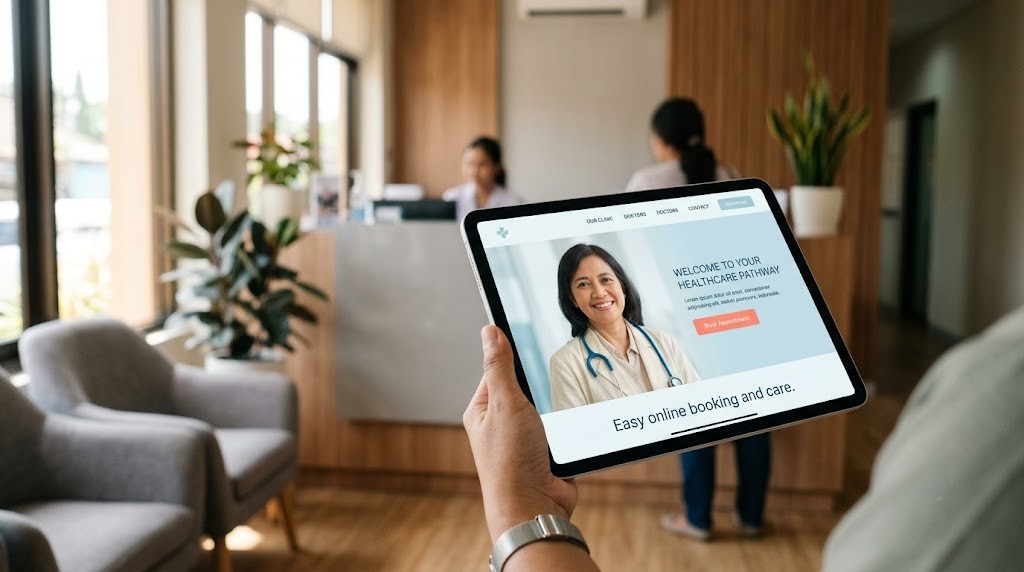
A healthcare website faces a challenge no other industry encounters quite the same way. The person arriving at your digital doorstep may be scared, in pain, or making one of the most consequential decisions of their life. They are not browsing for entertainment or convenience. They are searching for help under duress.
This emotional context transforms what might otherwise be a straightforward design project into something far more nuanced. Every choice — from the font size on mobile screens to the encryption behind a contact form — affects whether a vulnerable person feels safe enough to reach out. The margin for error shrinks when human wellbeing hangs in the balance.
Healthcare organizations that recognize this reality invest differently in their online presence. They prioritize trust, regulatory compliance, and genuine accessibility rather than chasing trends or cutting corners. Understanding how these priorities interact reveals what separates a competent medical website from one that truly serves patients.
Why Visual Authenticity Matters More Than Polish
People make snap judgments about credibility before they read a single word on your page. In healthcare, where trust directly influences whether someone books an appointment, that split-second evaluation carries enormous consequences for your practice.
Photography choices send the strongest immediate signal. Authentic images of your actual facility and the people who work there communicate transparency in ways that corporate stock photography cannot replicate. Patients searching for medical care are perceptive — they recognize manufactured imagery, and its presence on a site built to serve them raises legitimate questions about what else might be fabricated.
Written content must reinforce the same authenticity. Dense medical language creates an unintentional barrier between providers and the community they serve. Adopt a communication style that mirrors how a thoughtful physician speaks during a consultation — direct, patient, and focused on comprehension rather than impressing the reader with complexity.
Organization and navigation quietly communicate competence as powerfully as any visual element. People visiting medical websites are often anxious and operating under time constraints. They need quick access to appointment options, service descriptions, provider backgrounds, and contact methods without navigating through convoluted structures. A website designer experienced in healthcare environments arranges information so that the most essential details are never more than two clicks from the homepage. That structural clarity reassures patients that the practice itself operates with the same thoughtfulness.
The Non-Negotiable Role of Data Security
Patient information occupies a uniquely sensitive position in American law. HIPAA establishes strict requirements for how personal health data moves through digital systems — from the moment a patient types information into a form through its storage and eventual transmission. These requirements carry enforceable penalties, making compliance a baseline obligation rather than a competitive advantage.
This legal reality reshapes development priorities from the ground up. Features that function without concern on commercial websites can create serious exposure in healthcare. A basic contact form without encryption, for instance, transmits patient concerns across the internet in readable text. That vulnerability exists whether the practice knows about it or not, and ignorance provides no legal protection.
Security demands must extend across every system that touches patient data. Portals requiring patient login need multi-factor authentication. Scheduling tools must route information through servers certified for healthcare data handling. Staff communication channels involving patient details require encrypted transmission and documented access controls.
A web design company with sustained experience in healthcare builds these protections into the foundational architecture rather than retrofitting them later. They audit every third-party component before it goes live. They ensure that each data pathway encrypts information at the moment of capture. This methodical approach prevents the costly emergency patches that follow when security is deferred or misunderstood during initial development.
Converting Browsers Into Patients
An informational website and a functional one create fundamentally different outcomes for a medical practice. The first educates visitors. The second gives them a clear, immediate path to receiving care. Most healthcare sites achieve the first goal relatively easily. Far fewer execute the second with the consistency patients expect.
Appointment scheduling sits at the center of this conversion challenge. Patients overwhelmingly express preference for self-service booking. The ability to secure an appointment at any hour — bypassing phone menus, business hours, and hold times — represents a meaningful improvement in healthcare accessibility. Someone motivated to book at midnight deserves a system that accommodates that motivation rather than forcing them to wait until morning.
But the mechanism must deliver a smooth experience or it works against you. Slow-loading calendars, excessive required fields, and confusing confirmation sequences frustrate even highly motivated visitors. A website designer who understands medical workflows strips scheduling down to its essential components. Each step accomplishes exactly one task. Touch targets accommodate mobile fingers. Required information is limited to what compliance demands and nothing more. The patient reaches confirmation without once questioning whether they should have just called instead.
Equitable design ensures these benefits reach every patient, not just those without disabilities. Screen reader compatibility, adequate color contrast ratios, keyboard-navigable forms, and adjustable text sizing are not premium features. They represent baseline obligations under Web Content Accessibility Guidelines that every responsible practice must honor without exception.
Mobile Design Under Real-World Pressure
The phone in someone’s hand during a medical emergency tells a very different story than the same device during casual browsing. A parent searching for a pediatrician at midnight. A person experiencing chest pain evaluating urgent care options from a parking lot. A caregiver researching hospice facilities while sitting beside a loved one. These interactions carry emotional weight that fundamentally alters how design must perform.
A mobile experience built on desktop assumptions will lose these users immediately. Tiny text requiring pinch-to-zoom, navigation menus designed for mouse precision, and page loads that consume precious seconds all create barriers that distressed patients will not tolerate. Mobile healthcare design must begin from the understanding that the user’s patience, attention, and physical dexterity may all be compromised simultaneously.
The most critical elements must occupy the top of every mobile screen without exception. A single-tap phone number. An address that opens in the patient’s preferred navigation app. A scheduling button large enough to press accurately with a thumb. These components form the foundation of a mobile experience built for genuine urgency.
A web design company experienced with healthcare clients builds mobile-first by conviction, not convenience. They test on real devices under realistic conditions — slow cellular connections, one-handed operation, and users whose attention is divided. They understand that the interface must serve the patient’s circumstances without asking the patient to adapt to the interface.
The Case for Specialized Expertise
The distance between building a website for a consumer brand and building one for a medical practice cannot be measured in additional features or extended timelines. It involves entirely different regulatory frameworks, security standards, and user psychology. Learning these distinctions through direct project experience rather than theoretical preparation creates unacceptable risk in a healthcare context.
Evaluation of potential partners should prioritize demonstrated medical industry work. A website designer who has navigated healthcare-specific challenges brings foresight that saves both time and money. They have built secure intake processes that satisfy compliance requirements. They understand the precise standards for presenting medical credentials and professional affiliations. They have encountered the particular integration obstacles unique to healthcare technology environments and resolved them before.
Beyond technical proficiency, this specialization develops an emotional intelligence specific to healthcare. Medical websites must balance two qualities that can feel contradictory — clinical authority and genuine human warmth. Too much formality creates emotional distance during vulnerable moments. Too much casualness undermines the confidence patients need in their providers. Specialists in healthcare design navigate this tension with precision, using every available element to create experiences that feel simultaneously professional and deeply caring.
The Bottom Line
Healthcare web design is a specialized discipline requiring the integration of technical skill, legal knowledge, and emotional awareness into a cohesive whole. Each element depends on the others, and neglecting any one of them produces consequences that patients feel immediately.
Your digital presence shapes expectations before patients walk through your doors. It communicates whether your practice values their privacy, respects their time, and understands the anxiety that often accompanies seeking medical help. That communication happens continuously, whether you have designed for it or not.
Confront your website with complete honesty. Does it handle every piece of patient data according to federal requirements? Does it remove barriers between intention and appointment? Does it meet people during vulnerable moments with the speed, clarity, and compassion they need? Where the answers fall short, partnering with a web design company focused exclusively on healthcare produces improvements that patients notice and trust.