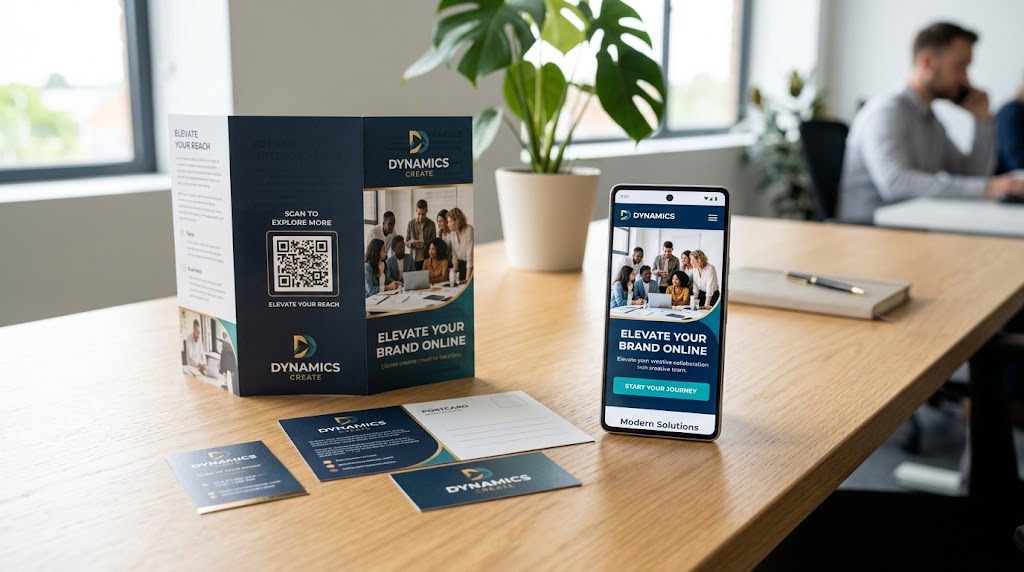
Imagine ordering 5,000 brochures with premium paper stock and carefully matched brand colors. Your print team spent weeks perfecting every detail. But what happens when a reader checks out your website after seeing that brochure?
Too many businesses treat their print and digital efforts as separate workstreams. A customer flips through a polished flyer, then lands on a website that feels like it belongs to a different company entirely. That disconnect erodes confidence fast. Coordinating both channels through a skilled web design company keeps your brand experience coherent from the first touch to the final click.
Print and online marketing accomplish more when they share a unified strategy. Consistent design and messaging make it simpler for prospects to move from curiosity to purchase. Here is how to bring those two worlds together effectively.
Keep Your Visual Identity Consistent
Consider the path a customer might take. They spot your postcard in their mailbox, then pull out their phone to learn more. If the postcard uses refined, modern typography but your site greets them with a cluttered layout, doubt creeps in. The person starts wondering whether they have landed on the right business.
Design continuity is what stitches print and digital together. Your website should adopt the same color palette, logo treatment, and typefaces found on your printed pieces. Screens and paper are different mediums, so a literal translation is not necessary. But the core visual language must feel familiar across every touchpoint.
When a skilled website designer starts a project, they will typically review your existing brand materials first. Business cards, flyers, and brochures all inform how the digital side should look. Drawing from these assets ensures the handoff between paper and screen feels seamless. Without that reference point, the two channels can drift apart quickly.
Use Short, Purpose-Built Links
Getting someone from a printed page to your website requires minimal friction. Most people will not type a long, complex URL into their phone. The easier the transition, the more likely they are to follow through.
Smart URL structure solves this problem. Replace links like “yourcompany.com/products/catalog/item456” with something clean and memorable. A short address such as “yourcompany.com/spring” works well on a postcard or billboard. Readers can type it in seconds, even without a smartphone camera.
QR codes have also become a practical bridge between print and digital. A code placed on a mailer or window sign lets people skip typing altogether. However, scanning is only step one. The destination page must deliver on whatever the printed piece promised.
A web design company can set up redirect links and configure QR codes that lead to the correct pages. Testing on multiple devices ensures the journey from physical material to digital experience never stalls. Small issues like a broken redirect can silently drain your campaign results.
Create Campaign-Specific Landing Pages
Routing print traffic to your homepage is a missed opportunity. A homepage must serve every type of visitor, from buyers to journalists. Someone who responds to a printed ad deserves a destination that speaks directly to them.
Suppose your flyer promotes a summer clearance event. The QR code on that flyer should open a page focused entirely on that event. Matching products, discounts, and imagery between the flyer and the page reassures visitors they are in the right place. That sense of continuity builds trust from the very first click.
Dedicated landing pages also make measurement possible. Traditional print tracking is imprecise at best. But a unique URL tied to one ad tells you exactly how many people visited and how long they engaged. That data clarifies whether a print investment is paying off.
Many web design company teams will include landing pages in the broader project scope. Reusable templates that echo your print layout make it straightforward to spin up new pages for each offline push. This approach keeps turnaround times reasonable without sacrificing design quality.
Optimize for Mobile First
Anyone holding a flyer or brochure usually has their phone within reach. Scanning a QR code means your website appears on a small screen within seconds. If the mobile experience is broken, the print campaign has already lost the prospect. Frustrated users rarely give a second chance.
Building for mobile involves more than scaling down a desktop layout. Interactive elements must respond well to touch. Text should be legible without pinch-zooming. Navigation should collapse into an intuitive menu.
A knowledgeable website designer structures content for people who are browsing quickly and on the move. Mobile visitors want fast access to key details like store hours, location, and contact options. Once print has sparked their interest, the mobile site must convert that interest into action. Every extra tap or delay increases the chance they move on.
Align Offline and Online Information
Consistency extends past visual design into the practical details customers rely on. Your brochure states that your store opens at 8 AM—your website should agree. Inaccurate or conflicting information creates doubt and drives prospects away. Trust is fragile when details do not line up.
Search engines also compare the information on your site with other data sources. A phone number or street address that differs between your print materials and your website can hurt your local rankings. Keeping everything aligned protects both customer trust and search visibility. Treat every piece of business data as shared between channels.
Partner with a web design company to ensure your site clearly displays your correct name, address, and phone number. Embedding a live map on your contact page gives readers an instant way to verify what they saw in print. These small touches reinforce credibility at a critical decision-making moment.
Let Print Spark Curiosity and the Web Deliver Depth
Print excels at catching attention in a crowded environment. A bold postcard rises above generic mail. A striking billboard captures eyes at highway speed. But a printed page has limited space for detail.
This is where your website expands the conversation. Print can tease a concept and invite people to explore further. The site then provides demonstrations, reviews, specifications, and stories the print piece could not contain. Rich media fills the gaps that ink and paper simply cannot.
An experienced Singapore website designer organizes pages so that print-driven visitors can find what they need fast. Clear calls-to-action appear exactly where users expect them. Print opens the door, and the website guides the customer the rest of the way. Each channel plays to its strengths while supporting the other.
Final Thoughts
Running your website and print marketing as disconnected efforts leaves value on the table. Customers perceive one brand, not two channels. They expect smooth continuity whether they are holding a glossy flyer or scrolling on a phone.
Aligning offline and online strategies strengthens both. Printed pieces perform better when they point to relevant, helpful web destinations. Your site gains qualified traffic because offline materials give people a concrete reason to visit. The two channels should amplify each other rather than compete for attention.
Next time you plan a print run, involve your digital team from the start. A comprehensive approach ensures that ink, paper, and pixels all tell the same story and move the customer forward together.