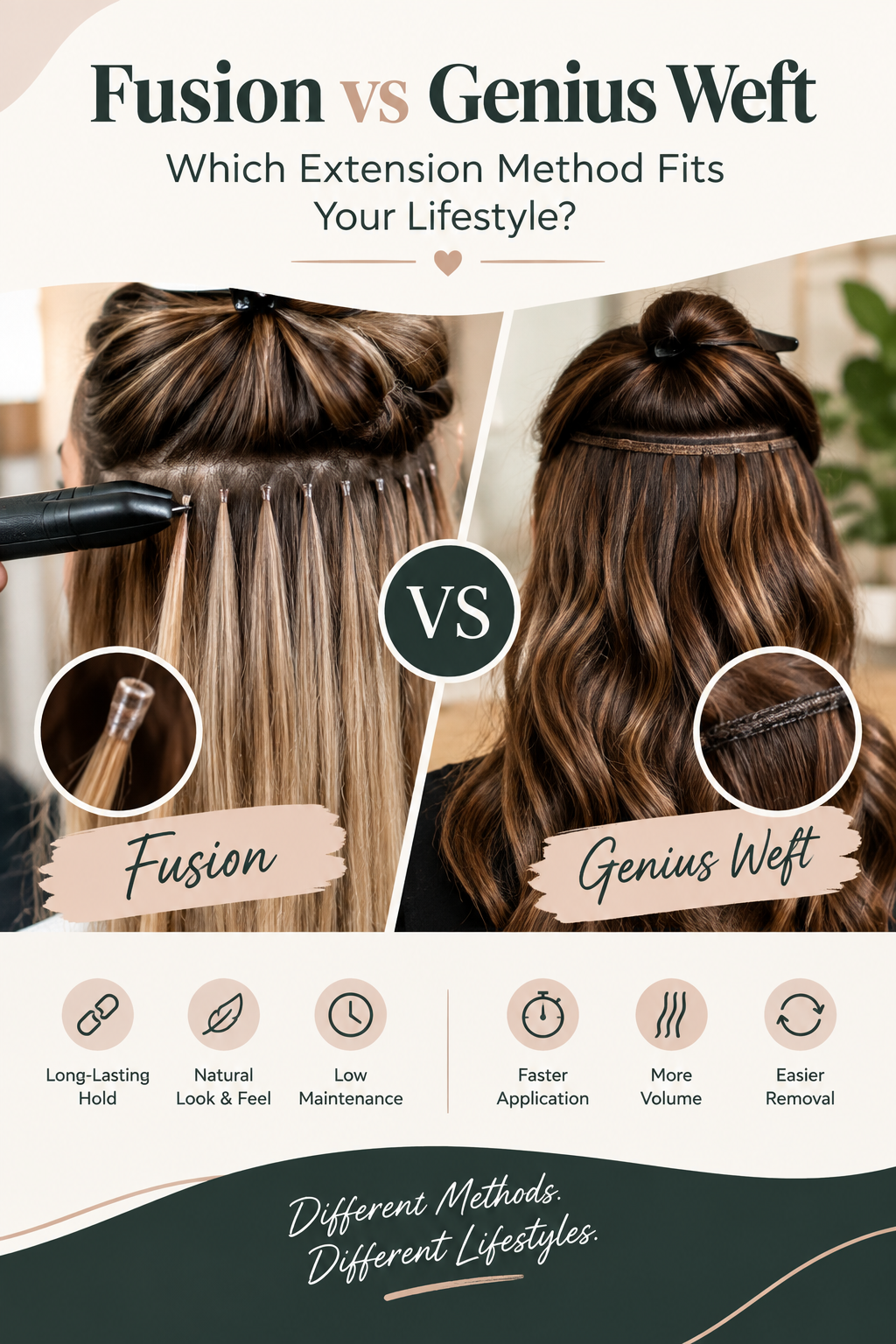
Choosing the right hair extension method is about more than adding length. The best option should match your hair type, daily routine, styling habits, maintenance preferences, and the look you want to achieve. Two popular choices are fusion extensions and genius weft extensions. Both can create fuller, longer hair, but they work differently and offer a different experience.
Understanding how each method is applied, maintained, styled, and removed can make it easier to decide which option fits naturally into your lifestyle.
Understanding Fusion Extensions
Fusion extensions are attached to the natural hair using a bonding material that connects individual strands or small sections of extension hair to the clients own hair. This method allows for detailed placement and can create a very natural appearance when installed correctly.
One of the main advantages of fusion bond hair extensions is their ability to provide a customized result. Because the extensions are applied in smaller sections, a stylist can carefully place them around the head to add length, volume, or both. This can be especially useful for people who want a seamless finish and enjoy wearing their hair in different styles.
Fusion extensions can also offer a long lasting result when they are properly installed and maintained. However, they require careful aftercare. Excessive heat near the bonds, harsh products, and rough brushing can affect the longevity of the installation.
Understanding Genius Weft Extensions
Genius weft extensions are made with a thin weft structure designed to sit close to the scalp while maintaining a lightweight feel. Unlike individual strand application, the hair is attached in sections, which can make the installation process more efficient.
Genius weft hair extensions can be a practical choice for people who want noticeable volume and length without having numerous individual attachment points. The weft can be customized to suit different areas of the head, allowing a stylist to create a balanced and comfortable installation.
Another benefit is the relatively flat design. When properly applied, the weft can blend naturally with the clients own hair and remain discreet under everyday hairstyles.
Comparing Comfort and Daily Wear
Comfort is an important consideration when choosing extensions. Fusion extensions use multiple small attachment points, which can distribute the added hair across different areas of the scalp. Some people appreciate this structure because it allows for detailed placement.
Weft extensions use larger sections of hair, so the experience can feel different. The number of wefts, their placement, and the amount of natural hair supporting them all affect comfort.
Your stylist should consider the density and strength of your natural hair before recommending a method. Extensions should never place excessive tension on the scalp or natural strands.
Maintenance Requirements
Your daily routine can play a major role in determining which method works better for you.
Fusion extensions generally require careful brushing and regular professional maintenance. Since the attachment points are small, brushing should be done gently from the ends upward. Products containing heavy oils should be kept away from the attachment areas unless recommended by your stylist.
Weft extensions also require regular brushing and professional adjustment. Because the extensions are installed in sections, the stylist can monitor how the natural hair grows and reposition or replace the wefts when necessary.
Regardless of the method, regular salon appointments help maintain a clean appearance and allow your stylist to check the condition of your natural hair.
Styling and Versatility
If you regularly change your hairstyle, placement becomes especially important. Fusion extensions can provide considerable flexibility because individual sections can be positioned strategically. This can help create a natural appearance when wearing the hair down, curled, straight, or partially tied.
Weft extensions can also offer styling versatility, especially when they are properly matched to your hair density and installed in suitable locations. However, very tight hairstyles should generally be avoided because excessive pulling can put unnecessary stress on both natural hair and extensions.
Heat styling should always be approached carefully. Use appropriate heat protection and avoid applying excessive heat directly to attachment areas.
Which Method Works With Different Hair Types?
There is no universal extension method for every person. Fine hair may require a lighter installation with careful weight distribution. Medium or thick hair can provide more support for certain extension arrangements.
People with naturally curly or textured hair may also need a customized installation that accounts for natural movement and shrinkage. A professional stylist can evaluate the hair before installation and determine how much extension hair is appropriate.
Hair condition is equally important. If the natural hair is already fragile, heavily processed, or experiencing breakage, adding extensions may require additional consideration.
Lifestyle Matters More Than Trends
Your daily habits should be part of the decision. Someone who washes their hair frequently, exercises regularly, travels often, or spends significant time outdoors may need an extension method that works comfortably with those habits.
Someone who prefers a structured salon routine and enjoys spending time styling their hair may be comfortable with a more detailed maintenance schedule.
Think about how often you wash your hair, how frequently you use heat tools, whether you swim, how you sleep with your hair, and how much time you are willing to spend on maintenance. These practical factors can be more important than simply choosing the method that is currently popular.
Longevity and Professional Maintenance
The lifespan of extensions depends on several factors, including the installation technique, hair quality, natural hair growth, daily care, and maintenance schedule. No extension method can provide the same lifespan for every person.
Professional removal is also important. Trying to remove extensions incorrectly can cause unnecessary pulling or breakage. A trained stylist can safely remove the extensions and assess the natural hair before another installation.
Between appointments, gentle brushing, suitable hair products, and proper nighttime care can help keep the extensions looking smooth and manageable.
Making the Right Choice for Your Routine
The best extension method is the one that fits your hair and your lifestyle rather than simply following a trend. Fusion can be appealing for people who want detailed placement and individualized styling. Weft extensions may suit those who prefer section based installation, efficient application, and a lightweight design.
Before choosing, discuss your hair density, texture, previous chemical treatments, styling habits, maintenance expectations, and desired result with a professional stylist. A proper consultation can help determine how much additional hair your natural strands can comfortably support.
Conclusion
Fusion and weft extensions can both provide beautiful length and volume when they are selected, installed, and maintained correctly. The right choice depends on your natural hair, styling routine, comfort preferences, and willingness to follow an appropriate maintenance schedule.
Rather than choosing based only on appearance, consider how the extensions will fit into your everyday life. A professional consultation can help you understand the differences and select an approach that supports a natural looking result while keeping your own hair care needs in focus.