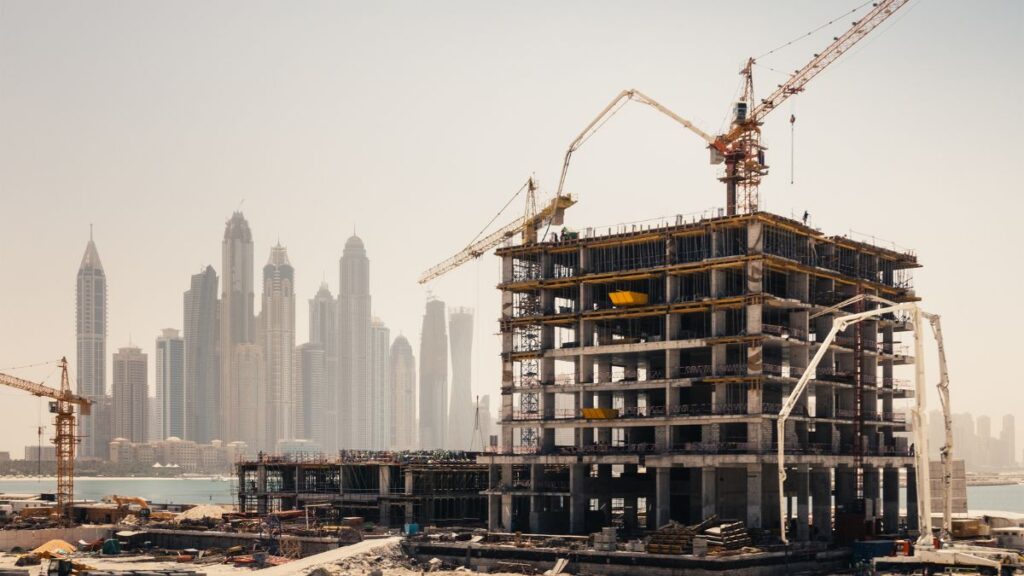
Construction
Infrastructure is a fundamental part of economic development, supporting transportation, housing, energy, healthcare, education, communication, and commercial activities. As populations grow and urban areas expand, governments and businesses are increasing their focus on developing and upgrading infrastructure to meet changing requirements.
The construction industry is therefore experiencing growing demand across residential, commercial, industrial, and infrastructure projects. At the same time, ageing infrastructure, urbanisation, technological development, and the need for more resilient structures are creating new opportunities for construction companies, material suppliers, engineering firms, and technology providers.
Construction Growth Driven by Infrastructure Development
According to Expert Market Research, the global construction market reached a value of USD 14.45 Trillion in 2025 and is projected to expand at a CAGR of around 6.50% during 2026-2035. The market is expected to reach USD 27.12 Trillion by 2035.
The expected expansion highlights the scale of construction activity required to support growing populations, expanding cities, industrial development, and infrastructure modernisation. Increasing investment in roads, bridges, airports, railways, utilities, commercial buildings, and housing is creating opportunities throughout the construction value chain.
For businesses, this growth is encouraging investment in new construction technologies, materials, equipment, and project management solutions.
Urbanisation Creating Demand for New Infrastructure
Rapid urbanisation is one of the major factors influencing construction activity. As more people move towards cities and urban populations increase, governments and developers need to provide housing, transportation, utilities, commercial spaces, and public facilities.
Growing cities require infrastructure that can support increasing numbers of residents while maintaining efficient transportation and essential services. This creates demand for residential buildings, roads, public transport systems, water networks, sewage systems, and other urban infrastructure.
Construction companies can benefit from these opportunities by developing capabilities suited to large-scale urban projects. At the same time, businesses involved in engineering, architecture, equipment, and construction materials can find new markets as cities expand.
Ageing Infrastructure Driving Renovation and Replacement
Infrastructure development is not limited to new construction. Many countries have existing roads, bridges, buildings, power networks, water systems, and transportation facilities that require maintenance, upgrades, or replacement.
Ageing infrastructure can increase the need for rehabilitation projects and modernisation. Businesses involved in construction, engineering, inspection, maintenance, and infrastructure technology can participate in these projects.
Renovation and repair work can also create opportunities for specialised construction materials and technologies designed to improve durability and extend the operational life of existing structures.
Growing Housing Requirements Supporting Construction
Population growth and urban expansion are increasing housing requirements in many markets. Developers and construction companies are responding through residential projects ranging from individual housing to large apartment developments.
Changing household structures and evolving lifestyles are also influencing the types of residential properties being developed. In urban areas, demand for compact and well-connected housing can encourage higher-density development.
This creates opportunities for construction businesses across the residential value chain, including architects, contractors, building-material manufacturers, equipment providers, and technology companies.
Government Infrastructure Investment Supporting Industry Growth
Public investment plays an important role in the development of infrastructure. Governments invest in transportation networks, public buildings, utilities, energy infrastructure, and other projects to support economic and social development.
Large infrastructure programmes can create demand for construction services over extended periods. Roads, bridges, railways, airports, ports, and public facilities require significant amounts of materials, equipment, engineering services, and labour.
For construction companies, government-backed infrastructure projects can therefore create opportunities for expansion and diversification, particularly for businesses with expertise in large-scale project execution.
Technology Transforming Construction Projects
Technology is changing how construction projects are planned, designed, monitored, and completed. Building Information Modelling (BIM), drones, artificial intelligence, Internet of Things (IoT) devices, and construction management software are increasingly being used to improve project visibility and coordination.
BIM can help project teams create digital representations of buildings and infrastructure before and during construction. This can support coordination between architects, engineers, contractors, and other stakeholders.
Drones can assist with site surveys and progress monitoring, while AI-powered systems can support scheduling, data analysis, and risk identification. These technologies are creating opportunities for construction technology providers while helping traditional construction businesses modernise their operations.
Demand for Sustainable Construction
Environmental considerations are becoming increasingly important in construction. Governments, businesses, and property developers are looking for ways to reduce resource consumption and improve the environmental performance of buildings and infrastructure.
This is increasing interest in energy-efficient buildings, sustainable materials, renewable energy integration, water-efficient systems, and construction practices that minimise waste.
For construction businesses, sustainability is creating opportunities to develop new capabilities and offer solutions tailored to evolving building requirements. Material manufacturers are also investing in products designed to improve energy efficiency, durability, and resource efficiency.
Infrastructure Resilience Creating New Opportunities
Climate-related risks, extreme weather events, and changing environmental conditions are increasing attention on infrastructure resilience. Buildings, roads, drainage systems, bridges, and utility networks need to withstand a range of operational and environmental pressures.
This can create demand for stronger construction materials, improved drainage systems, resilient building designs, and infrastructure upgrades.
Construction companies with expertise in resilience-focused projects can serve markets where governments and businesses are investing in infrastructure improvements. Engineering firms and material manufacturers can also develop specialised solutions for projects with specific resilience requirements.
Industrial and Commercial Construction Expanding
Infrastructure requirements are also connected to industrial and commercial development. Businesses need factories, warehouses, offices, distribution centres, data centres, and other facilities to support their operations.
The expansion of e-commerce, manufacturing, logistics, technology, and other industries is contributing to demand for specialised commercial and industrial structures.
For construction companies, these projects can provide opportunities to develop expertise in specialised building requirements. For example, warehouses may require advanced storage systems, while data centres require specialised power, cooling, and security infrastructure.
Smart Cities Supporting Construction Innovation
The development of smart cities is creating new requirements for infrastructure. Modern urban environments increasingly incorporate digital systems to improve transportation, energy management, public services, security, and resource utilisation.
Construction projects therefore need to accommodate technologies such as connected sensors, intelligent lighting, digital monitoring systems, and advanced communication networks.
This is encouraging collaboration between construction companies and technology providers. Buildings and infrastructure are increasingly being designed with digital capabilities from the planning stage rather than adding them after construction.
Construction Materials and Equipment Demand
Growth in construction activity creates opportunities throughout the materials and equipment supply chain. Cement, steel, concrete, glass, insulation, construction machinery, electrical equipment, and other products are required across different types of projects.
As construction companies adopt new techniques and sustainability goals, demand can also shift towards specialised materials and more efficient equipment.
Manufacturers that develop products aligned with changing construction requirements can access opportunities created by infrastructure expansion and modernisation.
Future Outlook for the Construction Industry
The construction industry is entering a period of continued development as infrastructure requirements evolve around urbanisation, population growth, technological advancement, sustainability, and the modernisation of ageing assets.
The projected growth of the global construction market from USD 14.45 Trillion in 2025 to USD 27.12 Trillion by 2035 demonstrates the scale of future construction activity. The CAGR of around 6.50% from 2026 to 2035 also indicates continued expansion across different construction segments.
For businesses, these trends create opportunities across construction services, engineering, materials, equipment, technology, and infrastructure management. Companies that adapt to changing project requirements and adopt technologies that improve efficiency, sustainability, and project coordination can participate in the evolving construction landscape.
As infrastructure needs continue to change, construction will remain closely connected to economic development and the transformation of cities and communities worldwide.