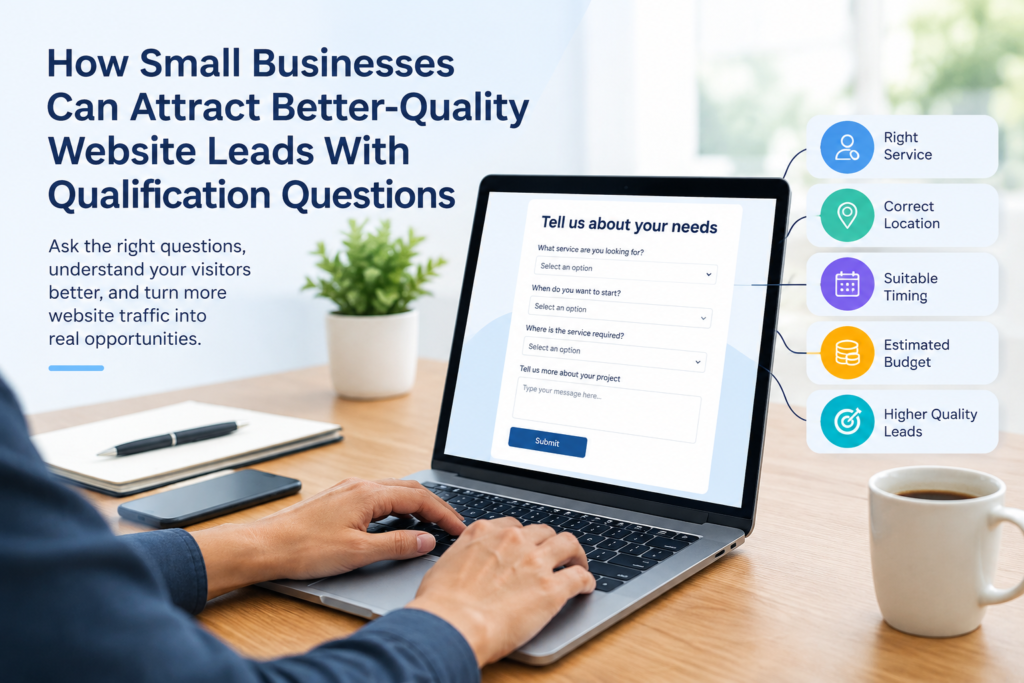
A website can bring visitors to a small business, but not every visitor is ready to become a customer. Some people are only looking for information. Others may be comparing several businesses. Some may not need the service at all.
This is where lead qualification becomes useful.
Qualification questions help a business learn more about a person before a sales conversation begins. The questions can cover the person’s needs, budget, location, project size, time frame, or other details linked to the service.
When these questions are placed in a website form, they can give a business more information about each enquiry. This helps the sales team understand who has a genuine need and which enquiries need attention first.
What Are Lead Qualification Questions?
Lead qualification questions are questions added to a website form to collect information about a potential customer.
A normal contact form may ask for basic contact details such as a name, email address, phone number and message. A qualification form can ask for more details related to the buying decision.
For example, a web design business may ask what type of website the visitor needs, whether they already have a website, how many pages they need, when they want to start the project and what their estimated budget is.
These questions do not need to be used only by web design companies. The same idea can work for accountants, property businesses, marketing agencies, tradespeople, consultants, software companies and many other small businesses.
The purpose is to collect information that helps the business understand the enquiry before contacting the person.
Why Website Leads Have Different Levels of Quality
A website can receive many enquiries, but the number of enquiries alone does not tell a business how useful those leads are.
Consider a plumbing business that receives 50 enquiries in one month. Ten people may need work in the business area and have a project that matches the services offered. The other 40 may be outside the service area, looking for a service the business does not provide, or only asking for general information.
In this case, the total number of enquiries does not show the full picture.
A lead becomes more useful when the person has a real need that matches the business service. Other factors can also matter, such as location, budget, timing and decision-making authority.
This is why small businesses can use qualification questions to gather more useful information at the first point of contact.
How Qualification Questions Work on a Website
Qualification questions are usually placed inside a lead form.
The visitor enters their contact details and answers questions about their needs. Once the form is submitted, the business receives the enquiry along with the additional information.
For example, a building company may ask what type of project the person is planning, when they plan to start and where the project is located.
The answers give the business a clearer picture of the enquiry. The form can then help the sales team decide what information to discuss during the first contact.
Ask Questions That Relate to the Buying Decision
Every question on a form should have a reason.
A small business should avoid adding questions simply to make the form longer. Each question should help the business understand whether the enquiry matches its service.
For example, a local landscaping business may need to know the property location, type of work and approximate project size.
A software company may need to know the number of users, business size and type of software required.
A mortgage broker may need information about the type of loan, employment status and approximate borrowing needs.
The right questions depend on the business and its customers.
Ask About the Customer’s Main Need
One useful qualification question asks what the person needs help with.
For example, a business can ask, “What service are you looking for?”
The answer can show whether the enquiry relates to a service the business actually provides.
A marketing agency may offer SEO, paid advertising and content marketing. Asking visitors to select the service they need can help separate different types of enquiries.
It can also help the business prepare for the conversation. A person asking about SEO may need a different discussion from someone asking about paid advertising.
Ask About Location When Location Matters
Location can be an important qualification factor for businesses that serve specific areas.
A plumber, electrician, builder, removal company or local service provider may only work within certain suburbs or regions.
A form can ask, “Where is the service required?”
This question can help identify whether the enquiry falls within the business service area.
It also prevents the sales team from spending time on enquiries that cannot be served because of location.
Ask About the Project Size
Project size can also help a business understand an enquiry.
For example, a commercial cleaning company may want to know the size of the building. A construction company may ask about the number of rooms or type of project. A marketing company may ask about the size of the business and current marketing activity.
The question should match the service.
A useful question could be, “How large is your project?”
The visitor can then select a suitable range. Using ranges can reduce the amount of typing required while still giving the business useful information.
Ask About Budget in the Right Way
Budget is often used as a qualification factor, but the wording matters.
Some visitors may not know the exact cost of a service. Asking for an exact amount may stop some people from completing the form.
A business can instead use budget ranges where appropriate.
For example, a business may ask, “What is your planned project budget?” The available choices could cover different price ranges and include an option for people who are still deciding.
The ranges should reflect the actual service and typical project sizes.
Budget questions can help a business understand whether the enquiry is within the type of work it normally handles.
Ask When the Customer Wants to Start
Timing can tell a business a lot about an enquiry.
Someone looking for a service today has a different level of urgency from someone researching a project for next year.
A form could ask, “When are you planning to start?”
The visitor could select a time period such as this month, within three months, within six months, later this year or still researching.
This information can help the sales team plan its follow-up.
It also gives the business a clearer view of its future sales opportunities.
Do Not Ask Too Many Questions
Qualification questions can improve the information collected from a form, but too many questions can create another problem.
A long form may require too much effort from the visitor. Some people may leave the page before submitting it.
The right number of questions depends on the business, the service and the information needed to assess an enquiry.
A business selling a high-cost service may need more information before starting a sales conversation. A business selling a lower-cost service may only need a few key details.
The aim should be to collect useful information without asking for details that have no clear purpose.
Use Multiple-Choice Questions Where Suitable
Multiple-choice questions can reduce the amount of writing required from the visitor because they can select an answer rather than write a long response.
For example, a marketing agency could ask what type of service the visitor needs and provide options such as SEO, Google Ads, website design or social media marketing.
Another question could ask when the visitor wants to start. The choices could cover this month, the next three months, later in the year or still researching.
These answers also create structured data that a business can use when reviewing enquiries.
Keep Open-Text Questions for Important Details
Open-text fields still have a place in lead forms.
A question such as “Tell us about your project” can allow a visitor to provide information that does not fit into multiple-choice answers.
For example, a person looking for a home renovation may explain that they want to renovate a kitchen and bathroom. This extra information can give the business context before the first conversation.
A form can combine multiple-choice questions with one useful open-text field.
Use Qualification Data for Better Follow-Up
Collecting information is only one part of lead qualification.
The business also needs to use the information after the form is submitted.
Enquiries can be grouped according to the service required, location, project size, budget range and starting time.
This can help the sales team decide what information to send and what questions to ask during the first conversation.
A lead that needs a service next week may need a different response from someone planning the same service six months from now.
Connect Qualification Questions With Lead Alerts
Website forms can also send alerts when a new enquiry arrives.
A lead alert can include the contact details and answers submitted through the form. This means the person handling enquiries can see the key information without opening the original webpage.
For small businesses, this can make lead handling more organised because the enquiry arrives with useful context.
For example, an alert could show that a person needs a website redesign, is located in Brisbane, has a project budget between $5,000 and $10,000 and wants to start within three months.
The sales team can then review the information before contacting the person.
How Better Qualification Can Support Lead Quality
Better qualification does not mean that every enquiry will become a customer. No form can guarantee that result.
Instead, qualification questions give a business more information about the people submitting enquiries.
For small businesses looking to attract better quality website leads, a form can ask questions that identify the customer’s service need, location, project size, budget and timing. LeadXForm provides a better quality website leads service that fits this approach by focusing on information collected through website enquiries and the details that can help businesses assess incoming leads. The role of such a system is not simply to collect names and contact details, but to connect the enquiry with useful qualification information. Learn more: https://www.leadxforms.com/
Review Which Questions Actually Help
A business should review its lead forms from time to time.
Look at the questions and compare the answers with what happens after the enquiry.
For example, if most enquiries from a certain service option never match the business, the form may need a clearer question about that service.
If many enquiries come from unsuitable locations, the form may need a location question earlier in the process.
If budget information is rarely useful, the business can review how the budget question is written or whether it is needed.
This process turns the form into a source of information rather than just a contact box.
Use Real Customer Questions to Improve Forms
Sales conversations can provide useful information for improving qualification questions.
Suppose sales staff repeatedly ask customers what type of property they have, how large the project is, when they need the work and whether they have received other quotes.
These questions may show that some of the same information could be collected through the website form.
The form can then provide this information before the sales conversation begins.
Qualification Questions Can Improve the Sales Process
For a small business, time spent handling enquiries can add up quickly.
A contact form with only a name, email address and message may leave the sales team with many unanswered questions.
Qualification questions can provide some of those answers before the first conversation.
This does not replace human communication. It gives the person handling the enquiry more context.
The result can be a more organised process from website visit to sales conversation.
Final Thoughts
Website traffic is only one part of online lead generation. The information collected from visitors also matters.
Qualification questions can help small businesses understand who is contacting them, what service they need, where they are located, how large their project may be, what budget range they have and when they want to start.
The questions should relate directly to the buying process. They should not be added simply to make a form longer.
A well-planned form can collect useful information while giving the sales team more context about each enquiry. When the questions, form, lead alerts and follow-up process work together, a small business can gain a clearer view of the enquiries coming through its website.