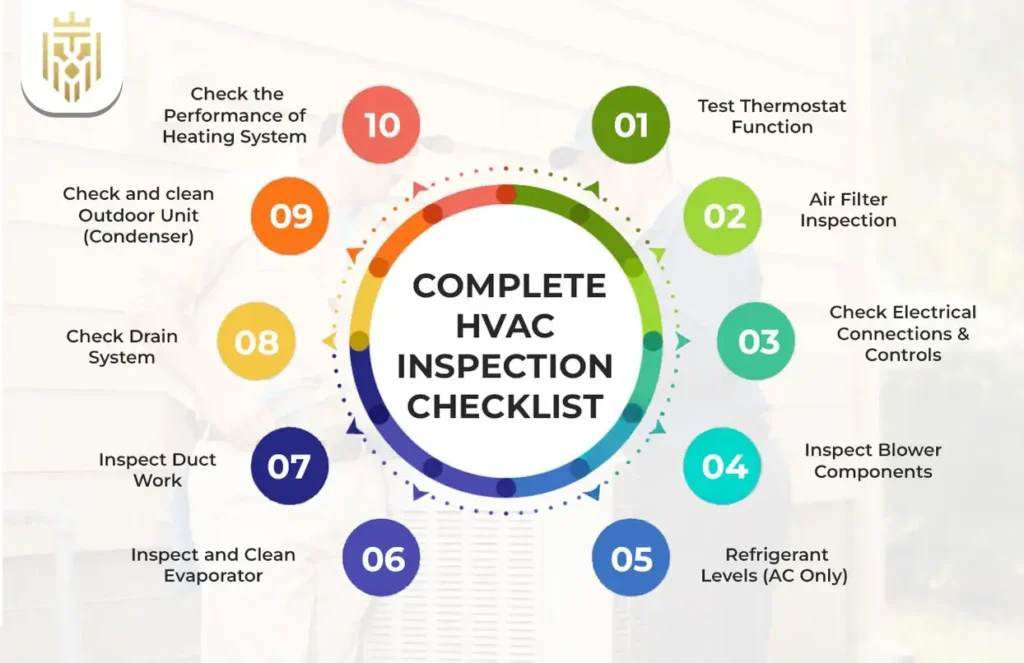
An HVAC system is one of the most critical investments in any residential, commercial, or industrial building. It regulates comfort, protects indoor air quality, and directly affects energy consumption. Yet many system failures and performance issues trace back to one overlooked step: a proper HVAC inspection.
This guide explains what an HVAC inspection typically covers, why it matters, and how it helps protect your system over the long term. Whether you manage facilities, operate an HVAC business, or simply want to extend equipment life, understanding HVAC inspection fundamentals is essential.
What Is an HVAC Inspection?
An HVAC inspection is a structured evaluation of heating, ventilation, and air conditioning components to ensure they are operating safely, efficiently, and within design specifications. Inspections may be performed during installation, as part of routine maintenance, or before seasonal demand peaks.
Unlike basic maintenance, which often focuses on cleaning or filter replacement, an HVAC inspection emphasizes assessment. Technicians examine system condition, identify early signs of wear, verify performance metrics, and flag issues before they become costly failures.
A thorough HVAC inspection follows standardized procedures and often relies on professional-grade diagnostic tools, including pressure gauges, airflow meters, electrical testers, and thermal imaging equipment.
Core Components Covered in an HVAC Inspection
While inspection depth can vary by system type and region, most professional HVAC inspections include the following key areas.
Heating and Cooling Equipment
Inspectors begin with the primary heating and cooling units. This includes furnaces, boilers, heat pumps, chillers, and air conditioning condensers. They check for visible damage, corrosion, unusual noise, vibration, or improper mounting.
Performance indicators such as temperature differential, fuel combustion quality, and refrigerant condition are also evaluated. These checks help confirm the system is delivering the output it was designed for.
Electrical and Control Systems
Electrical faults are a leading cause of HVAC breakdowns. An HVAC inspection includes testing wiring connections, contactors, relays, capacitors, and circuit boards. Inspectors look for loose connections, overheating components, and signs of electrical wear.
Control systems, thermostats, and sensors are verified for accuracy and responsiveness. Advanced inspection tools allow technicians to confirm proper voltage, amperage, and signal integrity across the system.
Airflow and Ductwork
Airflow issues often go unnoticed until comfort complaints arise. During an HVAC inspection, ductwork is checked for leaks, obstructions, insulation damage, and improper sizing.
Airflow measurements help confirm balanced distribution across zones. Poor airflow can reduce efficiency, increase energy costs, and place unnecessary strain on equipment. Early detection protects both comfort and system longevity.
Refrigerant System Evaluation
For cooling systems, refrigerant circuits receive close attention. Inspectors check pressure levels, line temperatures, and signs of leakage. Improper refrigerant charge is one of the most common causes of reduced efficiency and compressor damage.
Using precise gauges and leak detection tools ensures the system operates within manufacturer specifications and environmental regulations.
Safety and Compliance Checks
Safety is a critical part of any HVAC inspection. Inspectors test safety controls, limit switches, gas valves, and exhaust systems. For combustion equipment, carbon monoxide risk is assessed and ventilation pathways are verified.
These steps help protect occupants while ensuring compliance with local and international safety standards.
How HVAC Inspections Protect Your System
Regular HVAC inspections are not just preventative. They are protective.
Preventing Major Failures
Small issues often escalate silently. A worn capacitor, restricted airflow, or minor refrigerant imbalance can lead to compressor failure or heat exchanger damage if ignored. Inspections catch these problems early, when solutions are simpler and less expensive.
Extending Equipment Lifespan
HVAC systems are designed for long service life, but only when operating within proper parameters. Inspections confirm that components are not being overstressed, overheated, or forced to compensate for hidden issues. This directly extends system lifespan.
Improving Energy Efficiency
An inspected system runs closer to its optimal efficiency point. Correct airflow, proper electrical performance, and accurate controls reduce wasted energy. Over time, this translates into lower operating costs and reduced environmental impact.
Protecting Warranty and Investment Value
Many manufacturers require documented HVAC inspections to maintain warranty coverage. From a business or property management perspective, inspection records also protect asset value and support long-term planning.
The Role of Professional Tools and Products
A reliable HVAC inspection depends on the quality of the tools used. Professional inspection products enable accurate measurements, repeatable results, and faster diagnostics.
Modern HVAC inspection tools include digital manifolds, smart probes, airflow measurement devices, electrical testing instruments, and software-enabled reporting systems. These products allow technicians to move beyond guesswork and deliver data-driven insights.
For HVAC businesses, investing in professional inspection products improves service quality, builds customer trust, and supports consistent inspection standards across teams and regions.
How Often Should HVAC Inspections Be Performed?
For most systems, HVAC inspections are recommended at least once per year, ideally before peak heating or cooling seasons. Commercial and high-load systems may require more frequent inspections due to operating demands.
New installations, system upgrades, or ownership changes are also ideal times to conduct a full HVAC inspection.
Final Thoughts
An HVAC inspection is not an optional add-on. It is a foundational practice that protects system performance, safety, and long-term value. By understanding what’s covered and why it matters, building owners and HVAC professionals alike can make smarter decisions and avoid preventable failures.
When inspections are paired with the right professional tools and products, they become a powerful safeguard for any HVAC system, regardless of size or location.
Article ” HVAC Inspection 101: What’s Covered and How It Protects Your System ” publish by: harga ac 1/2 pk – acjakarta.com