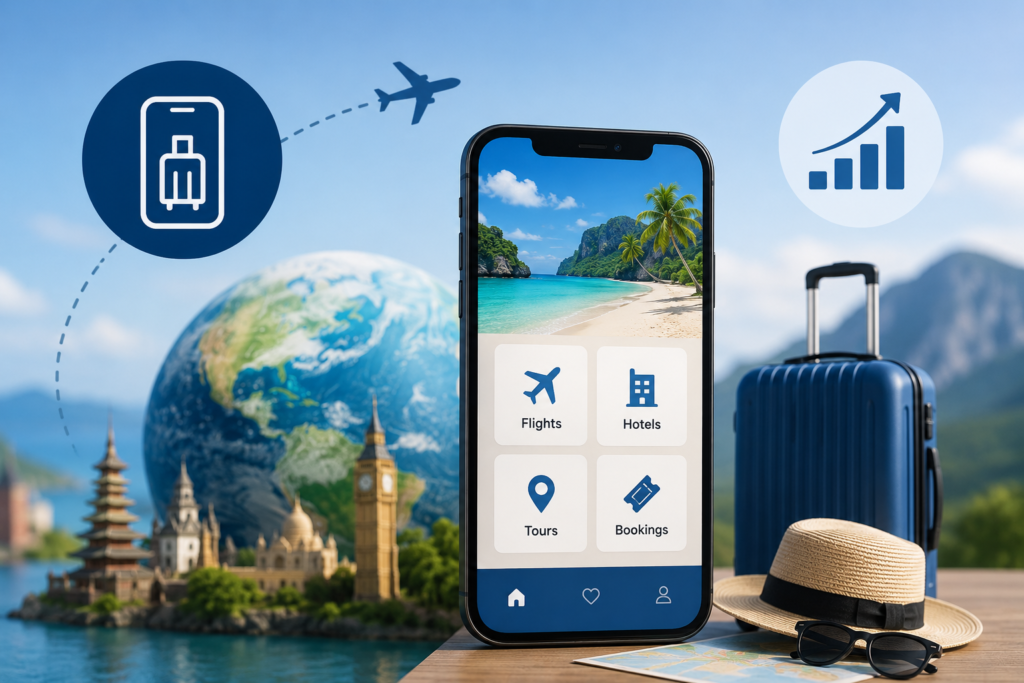
The travel industry is becoming increasingly digital, and travelers now expect convenience at every stage of their journey. From discovering destinations and comparing prices to making bookings and receiving real-time updates, customers prefer completing travel-related activities through their smartphones. For travel businesses, having a mobile app is no longer simply an advantage; it can become an important part of staying competitive in 2026.
A well-designed travel app can help businesses connect with customers directly, simplify booking processes, improve engagement, and create new revenue opportunities. As competition continues to increase, investing in the right technology can help travel companies deliver faster and more personalized experiences.
Changing Customer Expectations in the Travel Industry
Modern travelers want quick access to information and services without depending on multiple websites or physical travel offices. They expect to search for hotels, flights, tours, transportation, and activities from one convenient platform.
A mobile app provides this convenience by bringing important travel services into a single interface. Users can create profiles, save destinations, manage bookings, make payments, and receive notifications directly through their smartphones. This shift in customer behavior makes mobile applications increasingly valuable for travel agencies, tour operators, hotel businesses, travel marketplaces, and other companies operating in the tourism sector.
Benefits of Having a Mobile App for Travel Businesses
One of the biggest advantages of a mobile app is improved customer engagement. Unlike traditional websites, applications can use push notifications to communicate directly with users. Businesses can send booking confirmations, travel reminders, special offers, destination recommendations, and important updates.
A mobile app can also simplify the booking experience. Customers can search for available services, compare options, select their preferred choices, make secure payments, and receive instant confirmations. Reducing unnecessary steps can make the overall customer journey smoother. Businesses can also use mobile applications to build stronger customer relationships. Features such as personalized recommendations, loyalty programs, saved itineraries, and exclusive discounts can encourage users to return to the app for future trips.
Why Professional Travel App Development Matters
Building a successful travel application requires more than creating an attractive interface. The app needs reliable functionality, secure payment integration, location-based features, booking management, notifications, and a scalable backend.
Working with an experienced travel app development company can help businesses turn their travel ideas into practical digital solutions. Professional developers can understand business requirements, select appropriate technologies, design user-friendly interfaces, and develop applications that are capable of supporting growing numbers of users. The development process can also include features such as GPS integration, hotel and flight APIs, online payments, multilingual support, customer reviews, and real-time travel information.
Personalization Can Improve the User Experience
Personalization is becoming an important part of modern travel applications. Travelers have different preferences, budgets, interests, and travel styles. A mobile app can use customer activity and preferences to provide more relevant recommendations.
For example, an app can recommend destinations based on previous searches, suggest hotels according to a user’s budget, or highlight activities that match their interests. Personalized experiences can make the application more useful while helping businesses increase bookings and customer engagement. AI-powered recommendations can take personalization even further. Businesses can use artificial intelligence to analyze user behavior and provide destination suggestions, travel plans, chatbot assistance, and personalized offers.
Important Features Travel Apps Should Include
A successful travel app should provide features that solve real customer problems. Easy registration and profile management allow users to manage their information efficiently. Advanced search and filtering help travelers quickly find suitable flights, hotels, tours, or activities. Secure payment gateways are equally important because customers need confidence when making online transactions. GPS and location-based services can help users discover nearby hotels, restaurants, attractions, and transportation options.
Other valuable features can include booking management, digital tickets, travel itineraries, customer reviews, push notifications, wishlists, loyalty programs, and in-app customer support. Businesses looking for complete solutions can use travel app development services to create applications tailored to their specific requirements. Depending on the business model, developers can build apps for travel agencies, hotel booking platforms, tour operators, vacation rentals, transportation companies, or all-in-one travel marketplaces.
Mobile Apps Can Create New Revenue Opportunities
A travel application can become more than a booking platform. It can provide multiple revenue opportunities for businesses. Companies can earn through commissions on hotel and flight bookings, premium services, featured listings, advertisements, travel packages, and partnerships with local service providers.
For example, a travel marketplace can partner with hotels, restaurants, tour operators, and transportation providers. Users receive more services through one platform, while the business can generate revenue through commissions or partnerships. This makes a mobile app a valuable digital asset that can support both customer acquisition and long-term business growth.
Better Customer Communication
Communication plays an important role in the travel industry because customers often need updates before and during their trips. Mobile apps allow businesses to communicate with travelers quickly through push notifications and in-app messages. Businesses can notify users about booking confirmations, flight changes, check-in reminders, special deals, weather alerts, and itinerary updates. Faster communication can reduce confusion and improve customer satisfaction.
Secure and Scalable Technology
Security should be a major consideration when developing a travel application because users may share personal information, payment details, and booking data. Modern applications should use secure authentication, encrypted communication, reliable payment gateways, and appropriate data protection practices.
Scalability is equally important. A travel business may start with a limited customer base but experience rapid growth during holiday seasons or promotional campaigns. A scalable architecture allows the application to handle increasing users, transactions, and data without compromising performance.
Final Thoughts
In 2026, a mobile app can give travel businesses a direct channel to reach customers, simplify bookings, personalize experiences, and create additional revenue streams. As travelers increasingly rely on smartphones throughout their journeys, businesses that invest in mobile technology can be better positioned to meet changing expectations.
From booking and payments to personalized recommendations and real-time updates, the right travel application can bring multiple services together in one convenient platform. With a well-planned development strategy and the right technology partner, travel businesses can build scalable applications that support customer satisfaction and long-term digital growth.