bookkeeping and accounting service - Cube Accounting Solutions
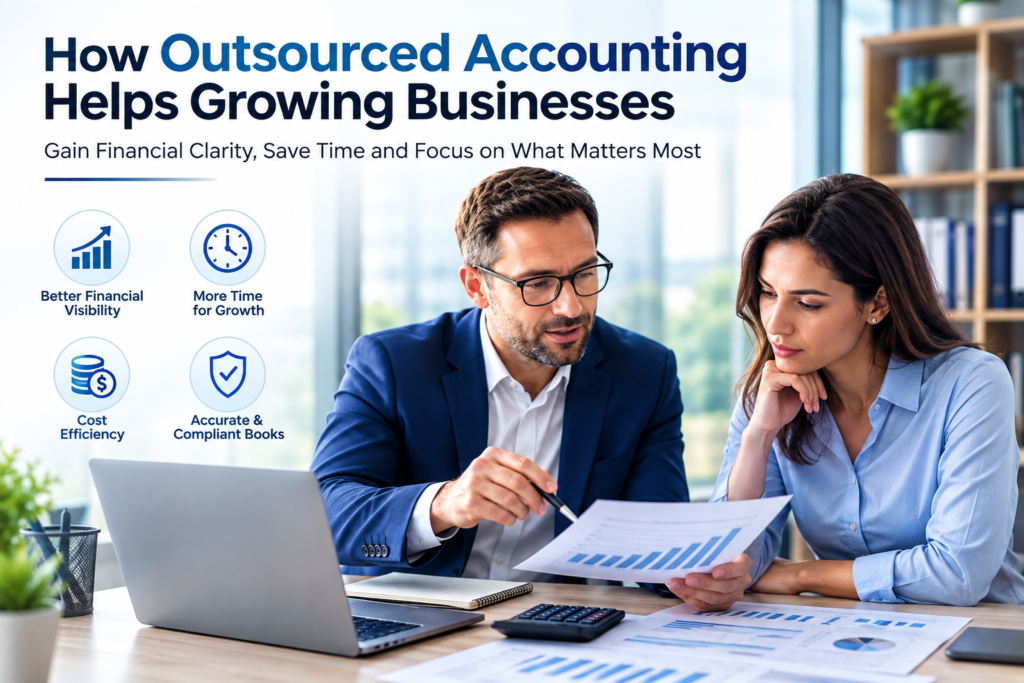
Running a growing business means making decisions about where to spend time, money, and internal resources. Accounting is one area that can become increasingly demanding as a company grows. More transactions, employees, customers, vendors, financial reports, and compliance requirements can make financial management difficult to handle without dedicated support.
For some businesses, outsourcing accounting services can be a practical way to maintain organized financial records while giving owners and internal teams more time to focus on growth.
But how do you know when it is the right time to outsource?
There is no single revenue level or company size that automatically makes outsourcing the right choice. Instead, businesses should look at their accounting workload, internal expertise, reporting needs, growth plans, and the amount of time management spends handling financial tasks.
What Does It Mean to Outsource Accounting?
Outsourced accounting means working with an external accounting provider to manage some or all of a company’s accounting responsibilities.
Depending on the business, these responsibilities may include:
- Bookkeeping
- Bank reconciliation
- Accounts payable
- Accounts receivable
- General ledger management
- Payroll accounting support
- Financial reporting
- Month-end closing
- Budgeting and forecasting
- Cash-flow management
The exact scope can be customized according to the company’s needs.
The U.S. Small Business Administration recommends that businesses make sure important financial functions such as accounts receivable, accounts payable, cash management, bank reconciliation, and payroll are properly managed.
7 Signs Your Business Should Consider Outsourcing Accounting
1. Accounting Takes Too Much Time
Business owners often begin by handling their own bookkeeping and financial administration. This may work when transaction volume is low.
As the business grows, however, accounting can take hours every week.
If you or your management team are spending significant time entering transactions, reconciling accounts, reviewing invoices, or preparing reports, it may be worth evaluating whether those tasks should be handled by an accounting professional.
Your time has value. If accounting responsibilities are preventing you from focusing on customers, sales, operations, or strategic planning, outsourcing may provide a better use of your resources.
2. Your Books Are Frequently Behind
Financial information is most useful when it is current.
If bank accounts have not been reconciled, transactions are waiting to be categorized, or monthly books are consistently several weeks behind, management may be making decisions using outdated information.
The IRS emphasizes the importance of maintaining appropriate business records and recording transactions properly as part of effective recordkeeping.
An outsourced accounting team can establish recurring processes that help keep financial records updated on a consistent schedule.
3. You Need Better Financial Reports
A growing business may need more than a basic profit-and-loss statement.
Management may want to understand:
- Monthly profitability
- Cash flow
- Accounts receivable
- Accounts payable
- Operating expenses
- Budget performance
- Revenue trends
- Department or project performance
If your current accounting process does not provide the information you need to make business decisions, outsourcing may help improve the quality and timeliness of financial reporting.
The goal should not simply be to produce reports. The reports should help management understand what is happening financially and identify areas that require attention.
4. Your Business Is Growing Quickly
Growth can create additional accounting complexity.
A company may add employees, customers, vendors, locations, products, or business units. Transaction volume can increase rapidly, and financial processes that worked for a small company may become difficult to maintain.
Growth is therefore a good time to review the accounting function.
Rather than waiting until the accounting workload becomes unmanageable, businesses can establish scalable processes earlier.
This can help create a stronger financial foundation as the company expands.
5. Your Internal Team Is Overloaded
Some businesses have an internal bookkeeper or accounting employee but still struggle with their workload.
The problem may not be a lack of commitment or ability. The business may simply have more accounting work than one person can reasonably handle.
For example, the accounting employee may be responsible for bookkeeping, invoicing, payroll, reconciliations, financial reports, vendor management, and other administrative responsibilities.
Outsourcing selected functions can provide additional capacity without requiring the company to immediately build a larger accounting department.
6. You Need Specialized Accounting Expertise
Not every business needs the same level of accounting support.
A growing company may eventually need assistance with areas such as:
- Financial reporting
- Cash-flow analysis
- Budgeting
- Forecasting
- Internal controls
- Accounting process improvement
- Management reporting
- Industry-specific accounting
Hiring a full-time specialist for every function may not be practical for a small or midsize business.
An external accounting provider can give businesses access to a broader range of expertise based on their requirements.
7. You Want to Spend More Time on Business Growth
One of the biggest reasons businesses outsource is to allow owners and employees to focus on activities that directly contribute to growth.
The SBA notes that outsourcing can allow small businesses to rely on outside professionals while keeping internal teams focused on their core activities.
Accounting remains important, but business owners do not necessarily need to perform every accounting task themselves.
With the right processes and provider in place, management can receive the financial information it needs while spending more time on customers, employees, sales, operations, and strategy.
What Accounting Functions Can Be Outsourced?
Businesses do not necessarily have to outsource their entire accounting department.
They can choose specific functions based on their needs.
Common outsourced accounting functions include:
Bookkeeping
Recording transactions, categorizing expenses, reconciling accounts, and maintaining financial records.
Accounts Payable
Managing vendor invoices, payment processing, and payable records.
Accounts Receivable
Tracking customer invoices, payments, outstanding balances, and collections processes.
Financial Reporting
Preparing financial statements and management reports that help business owners understand performance.
Payroll Support
Supporting payroll-related accounting processes and maintaining appropriate records.
Budgeting and Forecasting
Helping management plan future revenue, expenses, cash requirements, and financial goals.
CFO-Level Support
Some businesses may also use outsourced or virtual CFO services when they need higher-level financial planning and analysis without hiring a full-time CFO.
In-House vs. Outsourced Accounting
There is no universal answer to whether accounting should be handled internally or externally.
An in-house team may make sense when a company has sufficient transaction volume, specialized requirements, and the budget to maintain a larger accounting department.
Outsourcing may be attractive when a business wants professional support without the cost and management responsibilities associated with building a larger internal team.
Some companies also choose a hybrid approach.
For example, an internal employee may manage day-to-day financial activities while an external accounting provider handles reconciliations, financial reporting, month-end closing, or specialized accounting functions.
The best model depends on the company’s size, industry, transaction volume, budget, and financial goals.
How to Choose an Outsourced Accounting Provider
Once a business decides to explore outsourcing, choosing the right provider is important.
Consider these factors:
Industry experience
Does the provider understand your industry and its financial processes?
Service capabilities
Can the provider handle the specific accounting functions your business needs?
Communication
Will you have a dedicated point of contact and a reliable communication process?
Technology
Does the provider work with the accounting software and systems your business uses?
Security
How does the provider protect financial information and control access to sensitive data?
Reporting
What reports will you receive, and how frequently?
Scalability
Can the provider increase or adjust services as your business grows?
Pricing
Are the services, deliverables, and pricing structure clearly explained before the engagement begins?
Businesses should compare providers based on the overall value and suitability of the service rather than choosing solely on the lowest price.
Should You Outsource All of Your Accounting?
Not necessarily.
Outsourcing works best when the responsibilities, expectations, communication procedures, and reporting requirements are clearly defined.
A business may outsource bookkeeping while keeping financial decision-making internally. Another company may outsource accounts payable and accounts receivable while maintaining an internal accounting manager.
The right approach is the one that fills your organization’s gaps without creating unnecessary complexity.
Final Thoughts
The right time to outsource accounting is not determined by one specific revenue figure or number of employees.
Instead, look for practical signs: accounting is consuming too much management time, financial records are falling behind, reporting is insufficient, the internal team is overloaded, or the business needs accounting expertise that is difficult to maintain internally.
Outsourcing can give growing businesses access to professional accounting support while allowing owners and employees to concentrate on the activities that matter most to the company’s growth.
Before making a decision, evaluate your current accounting processes, identify the areas where your business needs help, and determine whether an internal, outsourced, or hybrid model makes the most sense.
For businesses looking for professional support, Cube Accounting Solutions provides general accounting and bookkeeping services designed to help businesses maintain accurate financial records and manage their accounting processes.
About the Author
Cube Accounting Solutions is a U.S.-based bookkeeping and accounting service provider supporting businesses with accounting, bookkeeping, accounts payable, accounts receivable, payroll, financial reporting, and virtual CFO services.