The Offline Vault: Securing Data in an Interconnected World
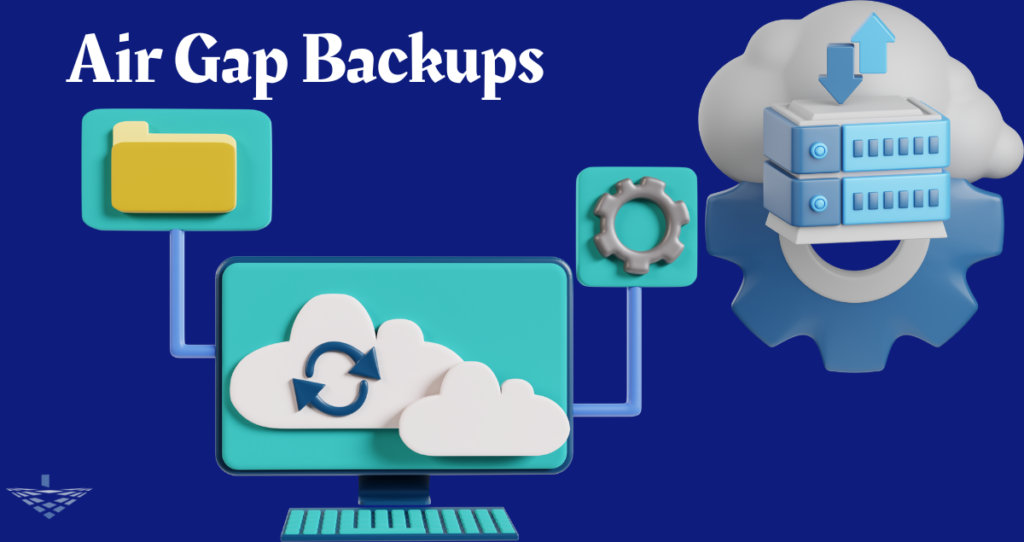
In a digital landscape defined by hyper-connectivity, the most effective way to secure your critical assets might just be to disconnect them entirely. Cyber threats have evolved from simple viruses into sophisticated, relentless campaigns designed to infiltrate every corner of a network. Ransomware, in particular, has become adept at lateral movement, jumping from infected workstations to servers and eventually to backup repositories. When every system is linked, every system is vulnerable. To break this chain of infection, organizations are turning to a strategy that introduces a physical or logical divide between their live environment and their archival data. This method, often implemented through Air Gap Storage, ensures that a pristine copy of your information remains unreachable to online attackers, providing a failsafe recovery option when all other defenses fail.
This concept of isolation is not a step backward; it is a strategic leap forward in cyber resilience. By treating your most valuable data like gold in a vault rather than files on a shared drive, you elevate your security posture significantly. This article will explore the mechanics of disconnected data protection, the various technologies that enable it, and why it is becoming an indispensable component of modern disaster recovery plans.
The Vulnerability of Connectivity
To understand the necessity of isolation, we must first recognize the inherent risks of our current infrastructure. Modern IT environments are built for speed and accessibility. Data flows freely between applications, users, and storage tiers to support real-time decision-making. However, this same seamless flow is what allows malware to spread with devastating speed.
The Ransomware Evolution
Early ransomware attacks were often indiscriminate, encrypting whatever files a user had access to. Today’s threats are far more insidious. Attackers spend weeks or months inside a network (a period known as “dwell time”) mapping out the infrastructure. Their primary target is often the backup system. They know that if they can destroy or encrypt the backups, the victim has no leverage and is far more likely to pay the ransom. If your storage systems are perpetually connected to the production network for easy management, they are exposed to these targeted attacks.
The Limits of Standard Redundancy
Many organizations confuse redundancy with security. Having multiple copies of data mirrored across different sites is excellent for protecting against hardware failure or natural disasters like fires. However, if those sites are linked by a real-time network connection, a cyberattack can traverse that link instantly. Encryption commands can replicate just as efficiently as valid data writes. True protection requires more than just a second copy; it requires a copy that exists outside the reach of the network protocols that attackers exploit.
Engineering the Perfect Divide
Achieving true data isolation requires a deliberate architectural choice to sever the link between production and protection. This can be done through physical means, which involve human intervention, or logical means, which rely on advanced software controls.
Physical Isolation: The Classic Approach
The most traditional form of protection involves completely removing the storage media from the system. This creates a literal gap of air between the data and the network.
- Tape Archives: Magnetic tape is the original offline medium. Once a backup job is written to a tape cartridge and that cartridge is ejected, the data is offline. It consumes no power and has no IP address. Tapes can be transported to secure, climate-controlled vaults, offering a high degree of durability and security.
- Removable Disk Systems: For businesses that need faster access than tape provides, removable hard drive systems offer a solution. These ruggedized cartridges plug into a dock for the backup window and are then physically removed and stored in a safe. While more expensive per terabyte than tape, they offer the random access speed of disk drives.
Logical Isolation: The Modern Solution
As data volumes grow, the manual handling of physical Media can become cumbersome and prone to human error. Modern enterprise storage solutions have adapted by creating “logical” air gaps. These systems reside on the network but are designed to be invisible and inaccessible for the vast majority of the time.
- Restricted Data Paths: In this setup, the storage appliance is physically cabled to the network, but the ports are administratively disabled or blocked by strict firewall rules. They only open for a very brief, scheduled window to ingest new data.
- The Role of Air Gap Storage in Modern Architecture: Advanced implementations utilize a secondary storage target that “pulls” data from the primary source rather than having it “pushed.” The secondary system sits behind a secure perimeter, initiates the connection from the inside, retrieves the immutable data blocks, and then immediately closes the connection. This “pull” method means the secondary storage has no open ports facing the production network, making it virtually invisible to port scanners and malware.
Why Isolation is a Business Imperative
Implementing this level of security is an investment, but the return on investment is the survival of the business itself. The cost of downtime and data loss far outweighs the cost of implementing secure storage.
Guaranteed Recovery
The primary benefit is the assurance of recovery. In a worst-case scenario where your entire production environment is compromised—servers encrypted, admin credentials stolen, and online backups wiped—your isolated data remains safe. It serves as the “break glass in case of emergency” option that allows you to rebuild your infrastructure from a known good state without negotiating with criminals.
Protection Against Insider Threats
External hackers aren’t the only risk. Disgruntled employees with administrative privileges can cause immense damage. An isolated system, particularly one that requires multi-person authentication (where two people must agree to authorize access), protects against malicious internal actors. Since the data is not readily accessible for modification or deletion, it adds a robust layer of internal security.
Meeting Compliance Standards
Regulatory bodies are increasingly prescriptive about data protection. Frameworks like NIST (National Institute of Standards and Technology) and regulations in finance and healthcare often mandate that organizations maintain recoverable copies of their data. An isolated, immutable copy is widely recognized as a gold standard for meeting these rigorous data integrity requirements.
Implementing Your Isolation Strategy
Moving to a disconnected storage model requires planning. It is not just about buying a new appliance; it is about defining a workflow that balances security with operational feasibility.
1. Define Your Critical Data
Not all data needs the highest level of protection. Isolate your “crown jewels”—customer databases, intellectual property, financial records, and core system configurations. Trying to apply this rigorous protection to every temporary file will bloat costs and complexity.
2. Determine Your Recovery Objectives
How much data can you afford to lose (RPO), and how fast do you need it back (RTO)?
- Low RPO/Fast RTO: You might need a disk-based logical isolation system that replicates every few hours and can restore data instantly.
- High RPO/Slower RTO: A daily or weekly tape backup sent offsite might be sufficient and more cost-effective.
3. The 3-2-1-1 Rule
Update the traditional backup rule. You need three copies of data, on two different media types, with one offsite, and one—crucially—offline or immutable. This modern variation explicitly calls for the isolation layer that protects against ransomware.
4. Regular Testing
A vault that never opens is useless. You must regularly test your ability to retrieve data from your isolated storage. This verifies two things: first, that the data integrity is intact and the media hasn’t degraded; and second, that your IT team knows the specific, often complex, procedures required to bring that data back online.
Conclusion: The Final Line of Defense
As we continue to digitize every aspect of business and society, the value of our data grows, as does the motivation for criminals to hold it hostage. The convenience of “always-on” connectivity has created a fragility in our systems that must be addressed. Relying solely on connected, online defenses is a gamble with diminishing odds.
By implementing a strategy that utilizes Air Gap Storage, you move beyond hope and into the realm of assurance. Whether you choose the tangible security of physical tape or the automated sophistication of a logically isolated appliance, the result is the same: you regain control. You create a sanctuary for your digital assets that is beyond the reach of malice, ensuring that no matter the severity of the attack, your organization has a path forward. In the high-stakes game of cybersecurity, this isolation is your ace in the hole.
FAQs
1. Is air gap storage expensive to implement?
It varies significantly based on the technology. A simple setup using rotating external hard drives is very affordable for small businesses. Enterprise-grade automated tape libraries or dedicated deduction appliances with logical air-gapping software are significant capital investments. However, compared to the cost of a ransomware payout or prolonged business downtime, it is generally considered a cost-effective insurance policy.
2. Does using offline storage slow down the backup process?
It can, but it doesn’t have to impact production. Typically, the “air gapping” happens as a secondary process. You back up your production data to a fast, local performance tier first. Then, a separate job moves that data to the offline storage. This way, your production systems aren’t waiting on the slower offline medium.
3. Can’t hackers just bridge the air gap?
For a physical air gap (like a tape on a shelf), it is impossible to bridge remotely; a hacker would need physical access to your building. For logical air gaps, there is a theoretical risk if the software controlling the gap has a vulnerability or if the attacker gains root access to the storage controller itself. This is why keeping the management software patched and using multi-factor authentication is critical.
4. How is this different from cloud storage with object locking?
Cloud storage with object locking (immutability) is a strong defense and follows similar principles. However, it is still technically “online” and accessible via the internet. A true air gap implies that the data path is severed. Many organizations use both: cloud immutability for convenience and an on-premise air gap for ultimate security.
5. How often should we send data to the air-gapped storage?
This depends on your risk tolerance. Since the process can be more intensive than a standard snapshot, many organizations choose a daily or weekly cadence for their isolated copies. Critical industries might do it more frequently. It’s a balance between having the most recent data safe versus the operational overhead of managing the isolation process.