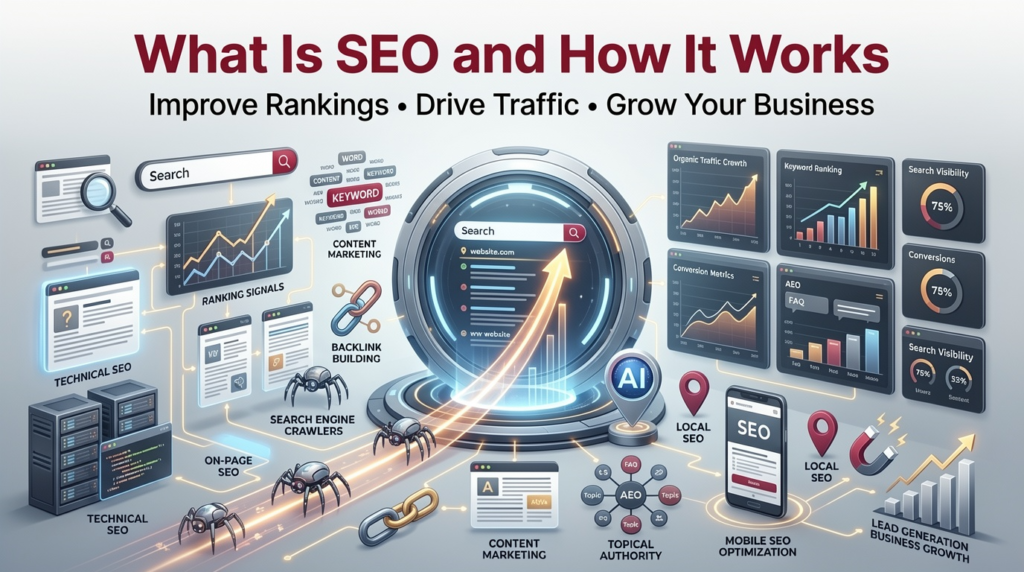
In today’s digital world, businesses compete fiercely for online visibility. Whether you’re a startup, a local business, or a large enterprise, appearing in search engine results can significantly impact your growth. This is where a professional search engine optimization service becomes essential. Search Engine Optimization, commonly known as SEO, helps websites improve their visibility in search engines like Google, making it easier for potential customers to discover products, services, and valuable information online.
Despite the rise of artificial intelligence, social media platforms, and new digital marketing channels, SEO remains one of the most effective long-term strategies for generating targeted traffic and building online authority. Understanding what SEO is and how it works can help businesses make informed decisions about their digital marketing investments.
What Is SEO?
Search Engine Optimization is the process of improving a website’s visibility in organic search engine results. The goal is to increase the quantity and quality of traffic by helping search engines understand the content and value of a website.
When users search for information, products, or services, search engines analyze billions of web pages to determine which results are most relevant. SEO helps websites align with search engine guidelines and user expectations, improving their chances of appearing prominently in search results.
Unlike paid advertising, SEO focuses on earning visibility naturally through content quality, technical optimization, authority building, and user experience improvements.
Why SEO Matters for Businesses
The majority of online experiences begin with a search engine. People use search engines every day to find answers, compare options, research businesses, and make purchasing decisions.
Without strong search visibility, even the best products or services can remain unnoticed.
SEO helps businesses:
- Increase website traffic.
- Generate qualified leads.
- Build brand awareness.
- Improve credibility.
- Enhance user experience.
- Increase conversions.
- Achieve long-term growth.
Businesses that invest in SEO often experience sustainable results that continue delivering value long after optimization efforts begin.
How Search Engines Work
To understand SEO, it is important to understand how search engines operate.
Search engines follow a three-step process:
Crawling
Search engines use automated programs known as crawlers or spiders to discover content across the internet.
These bots scan websites, follow links, and gather information about pages.
When a new page is published, crawlers attempt to find and analyze it.
Indexing
After crawling a webpage, search engines store its information in a massive database known as an index.
The index contains details about content, keywords, images, videos, page structure, and other important elements.
Only indexed pages can appear in search results.
Ranking
When a user performs a search, search engines evaluate indexed pages and determine which results best match the search query.
Ranking algorithms consider hundreds of factors to deliver the most relevant and valuable results.
SEO helps websites perform better during this ranking process.
The Main Components of SEO
Successful SEO involves multiple interconnected strategies.
On-Page SEO
On-page SEO focuses on optimizing elements directly within a website.
This includes:
- Page titles.
- Meta descriptions.
- Headings.
- Content quality.
- Keyword usage.
- Internal linking.
- Image optimization.
- URL structure.
The goal is to make content clear, relevant, and easy for both users and search engines to understand.
Technical SEO
Technical SEO ensures that a website functions properly and can be easily accessed by search engines.
Key technical factors include:
- Website speed.
- Mobile responsiveness.
- Secure HTTPS connections.
- Structured data.
- Crawlability.
- Indexability.
- Site architecture.
- Error management.
A technically optimized website provides a better user experience and supports stronger rankings.
Off-Page SEO
Off-page SEO focuses on activities that occur outside the website.
The most well-known component is backlink acquisition.
Backlinks are links from other websites that point to your content.
Search engines often view quality backlinks as signals of trust and authority.
Other off-page strategies include:
- Digital public relations.
- Brand mentions.
- Content promotion.
- Social visibility.
- Industry partnerships.
A strong off-page presence helps improve overall website credibility.
How Keywords Influence SEO
Keywords are words and phrases that users enter into search engines.
Understanding search behavior allows businesses to create content that matches user intent.
However, modern SEO is no longer about repeating keywords excessively.
Instead, search engines focus on:
- Context.
- Relevance.
- Meaning.
- Topic coverage.
- User satisfaction.
Effective keyword research helps identify opportunities while ensuring content remains natural and valuable.
Understanding Search Intent
One of the most important concepts in modern SEO is search intent.
Search engines aim to understand why users perform searches.
Common types of intent include:
Informational Intent
Users seek information or answers.
Examples include:
- What is SEO?
- How does SEO work?
- SEO best practices.
Navigational Intent
Users want to visit a specific website or brand.
Examples include:
- Google Search Console.
- SEO software platforms.
- Business websites.
Commercial Intent
Users are researching products or services before making a decision.
Examples include:
- Best SEO company.
- Top digital marketing agencies.
- SEO service comparisons.
Transactional Intent
Users are ready to take action.
Examples include:
- Hire SEO consultant.
- Buy SEO software.
- Request SEO services.
Successful SEO strategies align content with the appropriate user intent.
The Importance of High-Quality Content
Content serves as the foundation of SEO.
Search engines prioritize content that provides value to users.
High-quality content should:
- Answer user questions.
- Provide accurate information.
- Demonstrate expertise.
- Offer unique insights.
- Be easy to read.
- Remain relevant and up to date.
Businesses that consistently publish helpful content often achieve stronger search visibility.
Popular content formats include:
- Blog articles.
- Guides.
- Case studies.
- Videos.
- FAQs.
- Industry reports.
- Tutorials.
- Educational resources.
Content that genuinely helps users is more likely to earn visibility and engagement.
User Experience and SEO
Search engines increasingly evaluate how users interact with websites.
A positive user experience contributes to stronger SEO performance.
Important user experience factors include:
- Fast page loading.
- Mobile-friendly design.
- Clear navigation.
- Easy readability.
- Minimal distractions.
- Secure browsing.
- Accessible design.
When users enjoy interacting with a website, they are more likely to stay longer, engage with content, and convert into customers.
The Role of Mobile SEO
Mobile devices account for the majority of internet traffic worldwide.
As a result, search engines prioritize mobile-friendly websites.
Mobile SEO focuses on ensuring that websites perform effectively on smartphones and tablets.
This includes:
- Responsive design.
- Fast mobile loading speeds.
- Easy navigation.
- Optimized content formatting.
- Touch-friendly interfaces.
A poor mobile experience can negatively impact rankings and user satisfaction.
Local SEO and Business Growth
For businesses serving specific geographic areas, local SEO is particularly important.
Local SEO helps organizations appear in searches such as:
- Restaurants near me.
- Plumbers in my city.
- Dentists nearby.
- Local marketing agencies.
- Key local SEO strategies include:
- Google Business Profile optimization.
- Customer reviews.
- Local citations.
- Location-specific content.
- Accurate business information.
Strong local visibility often translates directly into increased calls, inquiries, and customer visits.
Common SEO Myths
Many misconceptions continue to surround SEO.
SEO Produces Instant Results
SEO is a long-term strategy.
Meaningful improvements typically require consistent effort over several months.
More Keywords Mean Better Rankings
Keyword stuffing can actually harm performance.
Modern SEO prioritizes relevance and user value.
SEO Is Only About Google
While Google dominates search, SEO principles also apply to other search engines and emerging AI-driven discovery platforms.
SEO Is a One-Time Activity
SEO requires ongoing monitoring, updates, and optimization.
Search behavior, competition, and algorithms constantly evolve.
How SEO Is Changing in 2026
SEO continues evolving alongside advancements in artificial intelligence and search technology.
Several trends are shaping the future of search optimization.
AI-Powered Search Experiences
Search engines increasingly use artificial intelligence to generate summaries and answer questions directly.
Businesses must optimize content not only for rankings but also for AI visibility.
Answer Engine Optimization
As users interact with AI tools and conversational search platforms, Answer Engine Optimization has become increasingly important.
Content must be structured to provide clear and direct answers.
Topical Authority
Search engines now reward websites that demonstrate expertise across entire subject areas rather than focusing solely on individual keywords.
Building comprehensive content ecosystems strengthens authority and visibility.
Trust and Expertise
Credibility continues playing a major role in rankings.
Businesses that demonstrate expertise, transparency, and reliability are more likely to succeed.
Measuring SEO Success
Effective SEO relies on data and continuous improvement.
Common performance indicators include:
- Organic traffic growth.
- Keyword rankings.
- Lead generation.
- Conversion rates.
- Bounce rates.
- User engagement.
- Revenue attribution.
- Backlink acquisition.
Regular analysis helps identify opportunities and refine strategies over time.
Conclusion
SEO is the process of helping search engines understand, trust, and recommend your website to users seeking relevant information, products, or services. By combining technical optimization, content creation, keyword research, user experience improvements, and authority building, businesses can achieve sustainable online visibility and long-term growth.
As search technology continues evolving with artificial intelligence and changing user behaviors, SEO remains one of the most effective digital marketing investments available. Organizations that embrace modern optimization strategies are better positioned to attract qualified traffic, build credibility, and stay competitive in the digital marketplace. For businesses looking to strengthen their online presence through technical SEO, content marketing, local optimization, AI visibility, and long-term growth strategies, Vibrant Logics provides comprehensive SEO solutions designed to help brands achieve meaningful and measurable results.