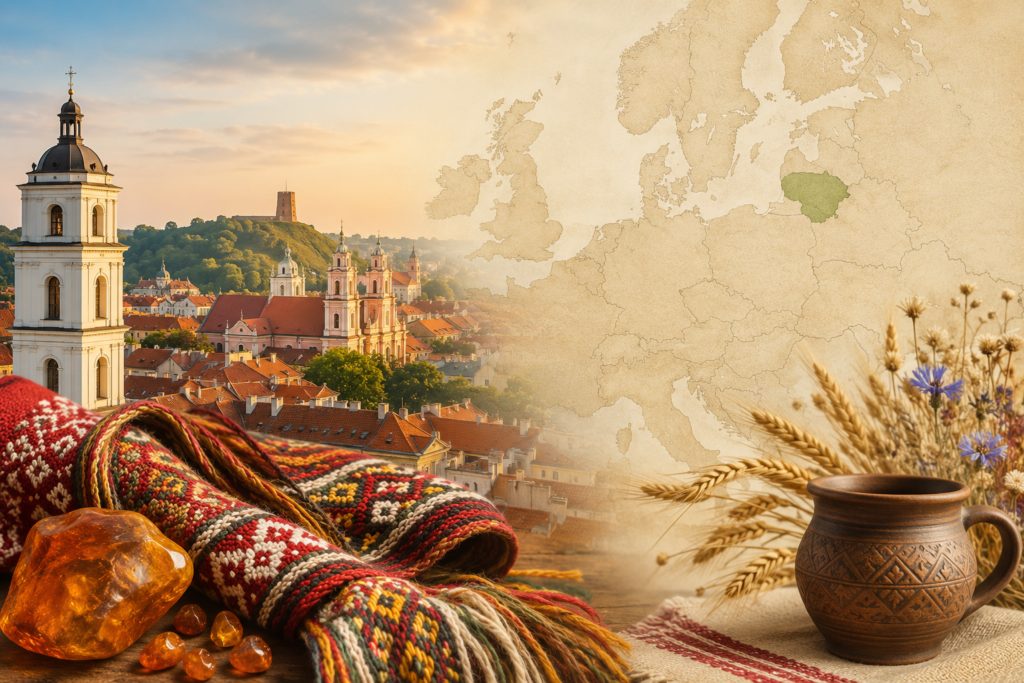
If you are planning a trip to the Baltic region, you may be wondering where is Lithuania located and what makes this European country special. Lithuania is one of the three Baltic states, together with Latvia and Estonia, and is situated on the southeastern coast of the Baltic Sea. The country is known for its historic cities, beautiful natural landscapes, medieval heritage, traditional food, and strong cultural identity.
Lithuania’s location has played an important role in shaping its history and connection with neighboring countries. Today, visitors can experience a fascinating combination of historic traditions and modern European life. From the streets of Vilnius to the Baltic coastline and traditional cultural festivals, Lithuania offers plenty to discover.
Where Is Lithuania Located in Europe?
For travelers asking where is Lithuania located, the country can be found in Northern Europe along the southeastern shore of the Baltic Sea. Lithuania is the southernmost of the three Baltic states. Latvia borders it to the north, while Belarus is located to the east and south. Poland borders Lithuania to the southwest, and Russia’s Kaliningrad region is situated along part of its western border.
The capital city, Vilnius, lies in the southeastern part of the country and is Lithuania’s largest city. It is an important center for government, business, history, art, and culture. Other notable cities include Kaunas, Klaipėda, and Šiauliai.
Lithuania’s geographical position has historically made it a connection point between different parts of Europe. Its access to the Baltic Sea also encouraged trade and cultural exchange. For modern travelers, its location makes it possible to combine a visit to Lithuania with trips to nearby Baltic and European destinations.
Lithuania’s Geography and Natural Landscape
Lithuania has a diverse natural environment despite being a relatively compact country. Its landscape includes forests, lakes, rivers, agricultural areas, wetlands, and a coastline along the Baltic Sea.
One of the country’s most remarkable natural attractions is the Curonian Spit. This narrow peninsula is famous for its large sand dunes, pine forests, beaches, and coastal scenery. It is an excellent destination for travelers interested in nature, photography, hiking, and outdoor activities.
Lithuania’s geography has also influenced the lifestyle and traditions of its people. Forests historically provided food and natural resources, while rivers and lakes supported fishing and agriculture. Today, nature remains an important part of recreation and local culture.
Understanding Lithuania’s landscape can also help explain why many traditional celebrations, songs, and customs have strong connections with seasons and the natural world.
A Brief History of Lithuania
Lithuania has a long and significant history that has shaped its national identity. During the medieval period, the Grand Duchy of Lithuania developed into a powerful state and became one of the largest political entities in Europe.
Throughout its history, Lithuania experienced major political changes and influences from neighboring countries. The country declared independence in 1918 and later went through difficult periods during the 20th century, including Soviet occupation. Lithuania restored its independence in 1990.
These historical experiences have had a lasting impact on the country’s culture. Historic buildings, museums, monuments, castles, churches, and old towns provide visitors with opportunities to learn about Lithuania’s past.
The country’s history is also closely connected to its language and cultural traditions, which have helped preserve a distinctive Lithuanian identity through generations.
What Makes Lithuanian Culture Unique?
Lithuanian culture combines ancient Baltic heritage with influences from neighboring European societies. Language is one of the strongest elements of this cultural identity. Lithuanian is a Baltic language and has preserved many characteristics that make it particularly interesting to linguists.
Traditional craftsmanship is another important part of Lithuanian heritage. Weaving, embroidery, wood carving, pottery, and amber jewelry have been practiced for generations. Traditional designs often include geometric patterns and symbols that reflect the country’s cultural history.
Family and community have traditionally played an important role in Lithuanian society. Seasonal events, weddings, religious occasions, and family gatherings provide opportunities for people to maintain customs and share traditional foods.
Although modern Lithuania has a highly urban and digitally connected population, many aspects of traditional culture continue to appear in festivals, museums, cultural events, and everyday celebrations.
Lithuanian Culture and Traditions in Everyday Life
Lithuanian culture and traditions can be seen in many aspects of daily and community life. Traditional customs are particularly noticeable during important celebrations and seasonal events.
Joninės, or Midsummer, is one of Lithuania’s best-known celebrations. It takes place around the summer solstice and is commonly associated with bonfires, outdoor gatherings, singing, dancing, and folk customs. The celebration reflects the country’s historical connection with nature and seasonal changes.
Užgavėnės is another colorful Lithuanian tradition. This festival takes place before Lent and includes masks, costumes, music, dancing, traditional foods, and symbolic activities. It is traditionally connected with saying goodbye to winter and welcoming spring.
Folk songs and dances are also important parts of Lithuanian culture and traditions. Performances are often included in festivals and cultural events, allowing younger generations to learn about customs that have been passed down over centuries.
Traditional Lithuanian Food to Try
Food is one of the easiest ways to explore a country’s cultural heritage. Lithuanian cuisine developed around ingredients that were commonly available in the region, including potatoes, rye, dairy products, meat, mushrooms, berries, and other local ingredients.
Cepelinai are among the most famous Lithuanian dishes. These large potato dumplings are traditionally filled with meat or other ingredients and served with a rich topping. Kugelis, a baked potato dish, is another traditional favorite.
During the warmer months, visitors may want to try šaltibarščiai, a cold beet soup recognized by its bright pink color. Rye bread is also an important part of Lithuanian cuisine and has a long history in the region.
Traditional foods are often connected with family gatherings and celebrations. Exploring local restaurants and markets can therefore provide visitors with both a culinary experience and a better understanding of Lithuanian heritage.
Lithuanian Language, Music, and Folk Arts
Language, music, and folk arts are important elements of Lithuania’s national identity. The Lithuanian language belongs to the Baltic language group and is considered particularly significant for understanding the development of Indo-European languages.
Traditional folk songs, known as dainos, often describe nature, family, work, relationships, and important stages of life. These songs have been preserved through generations and remain part of cultural performances.
Folk crafts are equally valuable. Traditional Lithuanian artists and craftspeople have produced woven textiles, embroidered clothing, carved wooden objects, ceramics, and amber jewelry. Baltic amber has a particularly strong connection with the region and remains popular among visitors.
These artistic traditions demonstrate how Lithuania has maintained connections with its past while continuing to develop a modern cultural identity.
What Is Everyday Life Like in Lithuania?
Modern life in Lithuania combines contemporary European lifestyles with traditional values. Vilnius and other major cities offer universities, businesses, restaurants, cafés, museums, shopping areas, and entertainment venues.
Smaller towns and rural areas generally provide a quieter environment and may offer more opportunities to experience local customs and community events. Family gatherings and seasonal celebrations continue to be important parts of social life.
Lithuania has also developed a growing technology and business sector, particularly in its major cities. This combination of modern development and historical heritage makes the country an interesting destination for travelers.
Visitors can explore centuries-old architecture in the morning and enjoy modern restaurants, cultural spaces, or contemporary entertainment later in the day.
Why Lithuania’s Culture Is Worth Discovering
Once you understand where is Lithuania located, it becomes easier to appreciate the country’s position and its historical connections with the Baltic region. However, geography is only one part of the experience.
The country’s cultural heritage offers another reason to visit. Traditional festivals, food, folk music, crafts, and historic architecture provide insight into how Lithuanian identity has developed over time.
For travelers interested in European history and authentic cultural experiences, Lithuania provides a combination of natural beauty and living traditions. Exploring local museums, historic neighborhoods, cultural festivals, and traditional restaurants can make a visit more memorable.
Frequently Asked Questions About Lithuania
Where is Lithuania located?
Lithuania is located in Northern Europe on the southeastern coast of the Baltic Sea. It borders Latvia, Belarus, Poland, and Russia’s Kaliningrad region.
Is Lithuania part of Europe?
Yes. Lithuania is a European country and one of the three Baltic states, together with Latvia and Estonia. It is also a member of the European Union and NATO.
What is Lithuania famous for?
Lithuania is famous for its historic capital Vilnius, medieval heritage, Baltic Sea coastline, Curonian Spit, traditional cuisine, amber, folk music, and distinctive Baltic culture.
What are the main Lithuanian culture and traditions?
Important traditions include Midsummer celebrations, Užgavėnės, folk singing and dancing, traditional crafts, seasonal customs, and family-centered celebrations.
What food is Lithuania known for?
Lithuania is known for cepelinai, kugelis, šaltibarščiai, rye bread, and various potato-, mushroom-, dairy-, and meat-based dishes.
Conclusion
Lithuania’s location on the Baltic Sea has played an important role in shaping its history, identity, and relationship with neighboring countries. If you were wondering where is Lithuania located, it is a Northern European country positioned between Latvia, Belarus, Poland, and Russia’s Kaliningrad region.
Beyond its geography, the country offers a rich cultural experience. Exploring Lithuanian culture and traditions through traditional food, music, festivals, crafts, historic sites, and local customs can give visitors a deeper appreciation of this unique Baltic destination. Whether your interests include history, nature, architecture, or culture, Lithuania offers plenty of opportunities to discover something new.
through traditional food, music, festivals, crafts, historic sites, and local customs can give visitors a deeper appreciation of this unique Baltic destination. Whether your interests include history, nature, architecture, or culture, Lithuania offers plenty of opportunities to discover something new.