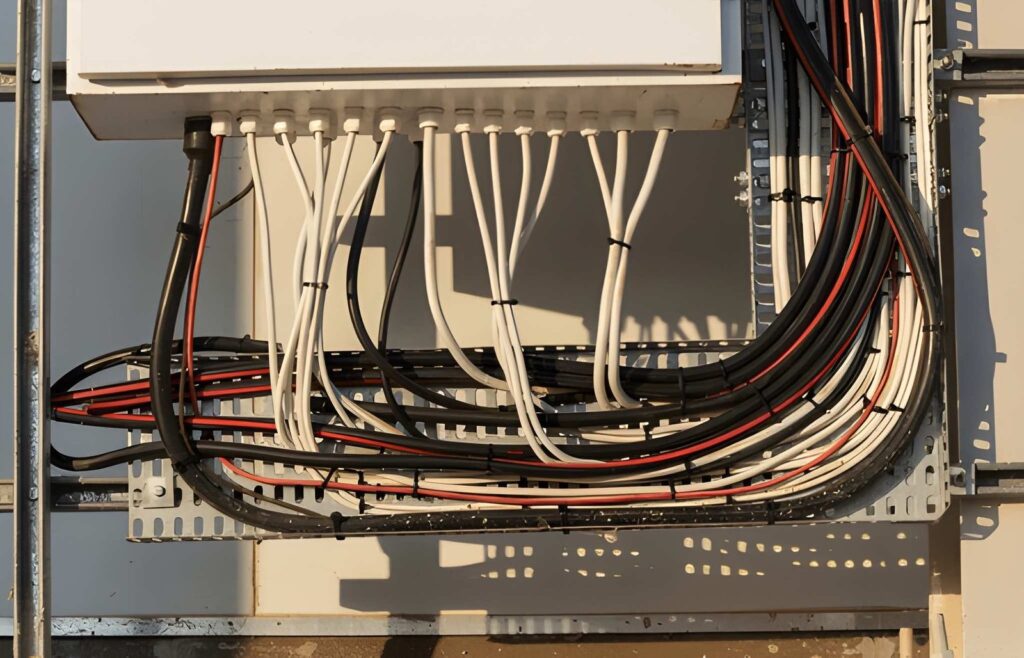
It was a busy morning at a manufacturing plant in Faisalabad. Workers were preparing machines for the day’s production targets when suddenly one section of the assembly line stopped responding. Motors were running, electricity was available, yet the system refused to follow commands.
The maintenance supervisor walked over and said, “Masla machine ka nahi lag raha, signal kahin lose ho raha hai.”
After inspection, the issue was traced to a damaged control cable.
Production resumed once the cable was replaced, but the incident reminded everyone of an important truth. In modern factories, power alone is not enough. Machines need instructions, signals, and communication. That silent job is handled by control cables.
Many factory owners focus on motors, automation software, and expensive machinery. Yet the network that connects all these systems often receives less attention than it deserves. Without quality control cables, even the most advanced factory can struggle with delays, communication errors, and operational interruptions.
What Is a Control Cable?
A control cable is a specialized cable used to transmit signals between different components of a machine or automation system.
Unlike power cables that carry electricity for operation, control cables carry commands and instructions. They tell machines when to start, stop, speed up, slow down, open, close, or perform specific tasks.
In simple words, if power cables are the muscles of a factory, control cables are the nervous system.
These cables are commonly used in:
- Manufacturing plants
- Packaging facilities
- Food processing units
- Textile mills
- Cement factories
- Water treatment plants
- Power generation facilities
As automation continues to grow, many businesses also look for the best control cables in Pakistan to improve communication, reliability, and long-term factory performance.
Why Are Factories Becoming More Dependent on Automation Systems
Modern factories operate differently than they did twenty years ago.
Businesses want:
- Faster production
- Better product quality
- Reduced downtime
- Improved safety
- Lower operational costs
Automation systems help achieve these goals.
Machines can perform repetitive tasks with accuracy and speed. Sensors can detect problems instantly. Control panels can manage hundreds of operations simultaneously.
All of these functions depend on communication.
That communication happens through control cable networks.
Without proper signal transmission, automation becomes unreliable.
DID YOU KNOW?
According to industry studies, automated manufacturing facilities can improve productivity by up to 30% while reducing operational errors significantly. The communication network connecting automation equipment plays a major role in achieving these results.
How Do Control Cables Work Inside a Factory?
Control cables transfer low voltage signals between equipment.
For example:
- A sensor detects a product on a conveyor belt.
- The sensor sends a signal through a control cable.
- The control system receives the signal.
- The machine performs the next action.
- This entire process may happen within milliseconds.
Without proper signal transmission, machines may:
- Respond late
- Stop unexpectedly
- Produce defective products
- Cause safety concerns
This explains why industrial engineers pay close attention to cable selection.
Why Are Control Cables Essential in Automation Systems?
Control cables for automation are essential because they create communication pathways throughout the factory.
Machine Coordination
Modern factories often contain dozens or even hundreds of interconnected machines.
These machines must work together.
Control cables allow information to move between:
- Sensors
- Controllers
- Motors
- Relays
- Switches
- Automated equipment
Operational Accuracy
Factories cannot afford mistakes during production.
Control cables help machines perform tasks accurately according to programmed instructions.
Faster Decision Making
Automation systems continuously collect information.
Control cables allow this information to reach control panels quickly, helping systems react instantly.
“Quality means doing it right when no one is looking.” Henry Ford
In automation, that quality depends heavily on consistent communication.
What Industries Use Control Cables Most Frequently?
Control cables for industries are used in many sectors across Pakistan.
Textile Industry
Pakistan’s textile sector relies heavily on automation.
Control cables connect:
- Spinning machines
- Weaving equipment
- Dyeing systems
- Packaging machinery
Food Processing Industry
Food manufacturing requires precise control.
Applications include:
- Filling systems
- Conveyor belts
- Sorting equipment
- Packaging lines
- Cement Plants
Cement production facilities use industrial cables extensively for:
- Material handling
- Crusher control
- Conveyor management
- Monitoring systems
- Water Treatment Facilities
Control cables help manage:
- Pumps
- Valves
- Monitoring equipment
- Filtration systems
Control Cables vs Power Cables: What Is the Difference?
| Feature | Control Cables | Power Cables |
| Primary Purpose | Transfer control signals between devices and automation equipment. | Deliver electrical power to machinery and systems. |
| Voltage Level | Generally lower voltage signal transmission. | Higher voltage electrical transmission. |
| Factory Role | Controls operations and communication. | Supplies operational energy. |
| Typical Applications | Sensors, relays, PLCs, control panels. | Motors, transformers, heavy equipment. |
| Impact of Failure | Machines may lose communication or respond incorrectly. | Equipment may stop receiving power completely. |
Both cable types are important, but their functions are very different.
Common Signs That Control Cables Need Replacement
Factories should monitor cable conditions regularly.
Warning signs include:
- Intermittent machine response
- Communication errors
- Unexpected shutdowns
- Visible insulation damage
- Frequent maintenance issues
Ignoring these signs can lead to larger operational problems.
Are Copper Conductors Better for Control Cables?
Copper remains one of the most widely used conductor materials.
Why Copper Is Preferred
Copper offers:
- Excellent conductivity
- Strong mechanical strength
- Long service life
- Stable signal transmission
These characteristics make copper cables in Pakistan a preferred choice for industrial automation, where stable signal transmission and long-term performance are essential.
This is also one reason why businesses often prefer products from established copper wire manufacturers in Pakistan.
Common Misconception About Control Cables
“Any Cable Can Be Used for Automation“
This belief creates many problems in industrial environments.
Some people assume that if electricity can flow through a cable, it can be used for automation.
That is not true.
Automation systems require signal accuracy.
Control cables are specifically designed to transmit control signals effectively.
Using unsuitable cables may result in:
- Communication problems
- Machine errors
- Production interruptions
How Can Factories Choose the Right Control Cable?
Factories searching for the best control cables in Pakistan should evaluate cable quality, insulation, conductor material, and installation conditions before making a decision.
Important areas include:
Environment
Will the cable be exposed to:
- Heat
- Moisture
- Chemicals
- Mechanical movement
Installation Method
The cable may be installed:
- In cable trays
- Underground
- Inside conduits
- Along machinery
Signal Requirements
Different systems require different cable configurations.
Consulting experienced cable specialists helps avoid costly mistakes.
Why Do Industrial Engineers Trust Quality Control Cables?
Industrial engineers understand that production success depends on thousands of small components working together.
Control cables rarely receive attention because they work silently behind the scenes.
Yet these cables support:
- Automation systems
- Production efficiency
- Equipment coordination
- Safety systems
- Process monitoring
Without stable communication, modern manufacturing becomes difficult.
That is why experienced engineers rarely compromise on cable quality.
Why Choose Universal Cables Industries Ltd. for Industrial Cable Solutions?
When factories look for dependable industrial wiring solutions, experience and manufacturing expertise matter greatly.
Universal Cables Industries Ltd. has earned its place among the leading electric cables manufacturers in Pakistan through decades of consistent quality and innovation. The company manufactures a wide range of industrial cables designed to meet the demands of modern automation systems and factory operations.
Recognized as Pakistan’s premium selling copper cables since 1978., the company continues supporting industries with products built for performance, durability, and long term service. Businesses searching for the best cables in Pakistan often look for manufacturers that understand local industrial conditions and operational requirements.
With extensive experience serving industrial projects across the country, Universal Cables Industries Ltd. continues helping factories build stronger communication networks through quality cable solutions.
The Silent Network Behind Every Successful Factory
Walk through any modern factory and you will see machines moving, conveyors running, and automation systems making thousands of decisions every hour.
What you may not notice is the network quietly connecting everything together.
Control cables serve as the communication pathway that allows machines to work as one coordinated system. Without them, automation systems lose their ability to respond accurately and efficiently.
“Efficiency is doing things right; effectiveness is doing the right things.” Peter Drucker
Factories achieve both when their automation systems communicate properly.
If your facility depends on automation, sensors, monitoring equipment, or production control systems, choosing quality control cables is not just a technical decision. It is a business decision that affects productivity, safety, and operational success every day.
FAQs
What is the primary purpose of a control cable?
A control cable transmits signals and commands between automation equipment, sensors, and control systems.
Where are control cables commonly used?
They are used in factories, manufacturing plants, textile mills, food processing facilities, water treatment plants, and automation systems.
Why are control cables important in automation systems?
They allow communication between machines and control equipment, helping automation systems operate accurately.
Are copper conductors suitable for control cables?
Yes. Copper offers excellent conductivity, strong performance, and stable signal transmission for industrial applications.
How can I identify a failing control cable?
Common signs include communication errors, intermittent machine response, damaged insulation, and unexpected equipment shutdowns.
Visit here for more informative blogs on articlehouses.com