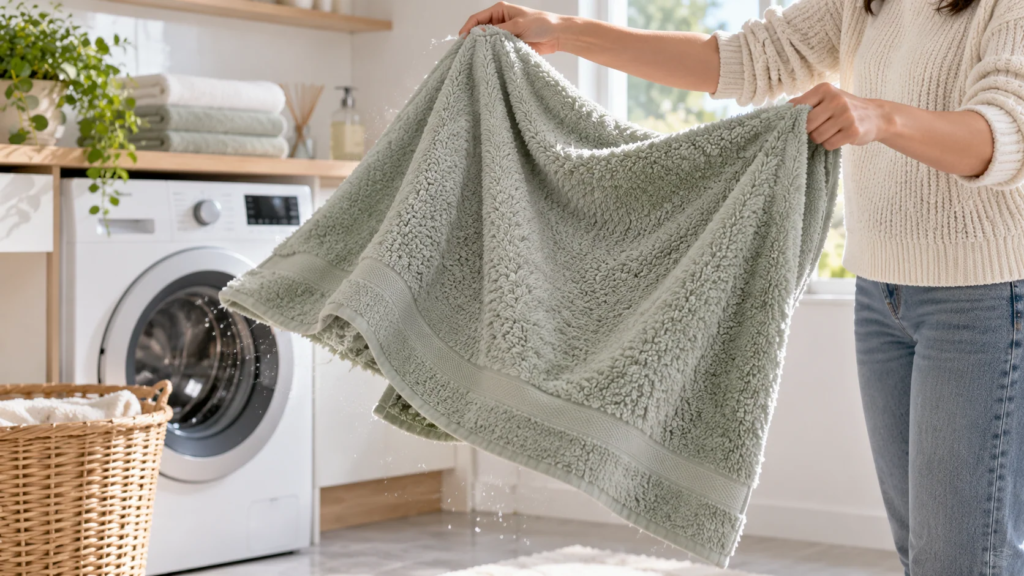
Freshly washed towels should feel clean, comfortable, and soft against the skin. However, many people experience the opposite after doing laundry. Instead of feeling fluffy, their towels become stiff, rough, and sometimes less absorbent. This can be frustrating, especially when the towels are washed regularly and good-quality detergent is used.
The problem is not necessarily related to the age or quality of your towels. Everyday laundry habits, water conditions, and drying methods can all influence how fabric feels after washing. Even small mistakes, such as using too much detergent or overloading the washing machine, can gradually affect towel softness.
Understanding the reasons behind this problem can help you improve your laundry routine. Here are six common causes of hard towels and practical ways to prevent them using effective Tips To Keep Towels Soft.
1. Using Too Much Laundry Detergent
One of the most common reasons towels become hard after washing is excessive detergent. Many people believe that adding more detergent will make heavily used towels cleaner. However, using more than the recommended amount can create the opposite result.
Towels have thick, absorbent fibers that can hold onto detergent residue. When the washing machine cannot rinse away all the remaining product, residue may accumulate between the fabric loops. Over time, this buildup can make towels feel stiff, coated, and uncomfortable.
The problem can become worse when washing smaller loads with detergent quantities intended for a full machine.
To avoid this issue, measure detergent according to the product instructions, load size, and water hardness. If your towels regularly feel rough after washing, consider reducing the detergent amount and using an additional rinse cycle when necessary.
Using the correct quantity helps remove dirt without leaving unnecessary cleaning products behind.
2. Hard Water Is Leaving Mineral Deposits
Water quality can have a significant impact on laundry results. Hard water contains higher concentrations of minerals, particularly calcium and magnesium. These minerals can interact with laundry detergent and gradually accumulate on fabric fibers.
As mineral deposits build up, towels may become rough and less flexible. You might also notice that detergent does not produce the same cleaning results as it does with softer water.
This issue is especially frustrating because changing your washing technique may not completely solve the problem if the water supply itself is contributing to the stiffness.
If your towels consistently feel hard despite using the correct detergent quantity, consider checking your household water hardness. A water testing kit can help identify whether mineral content is affecting your laundry.
Depending on the results, a washing-machine-compatible water softener or laundry additive may help reduce mineral buildup. Always follow product instructions and avoid combining different cleaning chemicals.
Understanding your water quality is one of the most useful Tips To Keep Towels Soft, particularly when ordinary laundry adjustments do not produce noticeable improvements.
3. Fabric Softener Is Coating the Towel Fibers
Fabric softener is designed to make certain fabrics feel smoother, but it is not always the best choice for towels. Many fabric conditioners leave a coating on the surface of fibers to create a softer sensation.
Although this coating may initially make towels feel pleasant, repeated use can affect their ability to absorb moisture. It may also contribute to product buildup, particularly when combined with excess detergent.
This creates a situation where towels may feel coated rather than naturally soft. They might also take longer to absorb water after a shower.
Instead of using fabric softener with every towel wash, consider avoiding it or limiting its use according to the towel manufacturer’s recommendations.
Focus on using the correct detergent quantity and ensuring that towels receive a thorough rinse. If conditioner buildup is suspected, a suitable cleaning cycle may help remove some residue.
Remember that a good towel should provide both softness and absorbency. A smooth surface is not useful if the fabric no longer performs its main purpose effectively.
4. The Washing Machine Is Overloaded
An overloaded washing machine can prevent towels from receiving a proper wash. Towels absorb large amounts of water, making them considerably heavier during a laundry cycle.
When too many towels are placed inside the drum, they have less space to move. Water and detergent may not circulate evenly, and the rinsing process can become less effective.
This can leave dirt and detergent residue trapped in the fabric. The result may be towels that feel stiff even though they have completed a full washing cycle.
To prevent this, avoid filling the drum beyond the manufacturer’s recommended capacity. Wash bulky bath towels in smaller loads and leave enough room for them to move freely.
It is also helpful to separate towels from lightweight clothing and items with rough zippers or fastenings. This reduces unnecessary friction and allows the machine to clean heavier fabrics more effectively.
Giving towels sufficient space is a simple adjustment that can improve washing results without requiring additional laundry products.
5. Incorrect Drying Methods Are Making Towels Stiff
Drying plays an important role in maintaining towel softness. Even when towels are washed correctly, unsuitable drying methods can leave them feeling rough.
Air-dried towels sometimes become stiff because their fibers dry in a compressed position. This can happen when towels are folded over several times, placed too close together, or hung in an area with limited airflow.
Excessive tumble-dryer heat can create a different problem. Repeated exposure to high temperatures may weaken fibers, contribute to shrinkage, and reduce the towel’s long-term durability.
The solution is to use a balanced drying method. If you prefer air drying, hang towels fully open in a well-ventilated area. Give each towel enough space for air to circulate around the fabric.
If you use a tumble dryer, follow the care label and choose a suitable temperature. Avoid unnecessary high-heat cycles and remove towels once they are completely dry.
Gently shaking towels before drying can also help loosen compressed fabric loops and improve their texture.
6. The Washing Machine Needs Cleaning
Sometimes, the cause of hard towels is not the detergent or water supply but the washing machine itself. Laundry equipment can collect detergent deposits, fabric conditioner residue, lint, and other unwanted material over time.
These deposits may remain inside the detergent dispenser, drum, rubber door seal, and other areas. If the machine is not cleaned regularly, leftover residue can affect the results of future laundry cycles.
A washing machine may also develop unpleasant odors when moisture remains trapped inside after use. This can affect the freshness of towels and other fabrics.
To maintain your machine, clean the detergent drawer and door seal according to the manufacturer’s instructions. Use the recommended drum-cleaning procedure or dedicated cleaning cycle when available.
After washing, leave the door and detergent drawer slightly open when appropriate to allow moisture to escape. This helps keep the interior fresh between laundry cycles.
Regular machine maintenance supports better cleaning results and helps prevent residue from transferring to freshly washed towels.
How to Prevent Towels From Becoming Hard Again
Once you identify the cause of stiff towels, making a few changes to your laundry routine can help prevent the problem from returning.
Start by measuring detergent carefully and avoiding unnecessary fabric conditioner. Choose a suitable washing cycle, avoid overloading the drum, and make sure towels receive an effective rinse.
Pay attention to water quality if stiffness continues despite changing your washing habits. Also, follow the manufacturer’s drying instructions and allow towels to dry completely before folding or storing them.
Between uses, hang towels fully open instead of leaving them in a pile. Store clean towels in a dry cupboard with enough space for airflow.
These simple Tips To Keep Towels Soft can help protect fabric fibers, maintain absorbency, and reduce the chances of towels becoming rough after repeated washing.
When Should You Replace Hard Towels?
Not every stiff towel needs replacing. If the problem is caused by detergent residue, hard water, or unsuitable drying, improving your laundry routine may help restore some of its original softness.
However, towels naturally experience wear after repeated use. If the fabric becomes thin, the loops are damaged, the edges are fraying, or absorbency has significantly declined, replacement may be the better option.
Persistent unpleasant smells that remain after proper washing can also indicate that a towel is no longer in good condition.
Before purchasing new towels, identify whether the problem is related to laundry habits or actual fabric damage. This can help you avoid unnecessary spending.
Final Thoughts
Towels becoming hard after washing is a common laundry problem, but it does not always mean they are old or damaged. Excessive detergent, hard water minerals, fabric softener buildup, overloaded washing machines, incorrect drying, and poor machine maintenance can all contribute to rough fabric.
The best approach is to identify the cause and make practical adjustments instead of adding more laundry products. With suitable washing, thorough rinsing, careful drying, and regular machine cleaning, you can help maintain comfortable and absorbent towels.
Following these Tips To Keep Towels Soft can make everyday towel care easier while helping your existing towels stay fresh, functional, and pleasant to use for longer.

