Botox has become a popular non-surgical cosmetic treatment for individuals who want to soften facial lines, improve expression-related wrinkles, and achieve a refreshed appearance without undergoing surgery. Although the treatment is widely recognised for its ability to relax targeted facial muscles, successful results depend on several technical factors. One particularly important consideration is injection depth.
The depth at which Botox is administered can influence which muscles or structures are affected, how the product spreads within the treatment area, and the overall appearance of the results. Different facial regions have different anatomical characteristics, meaning that a single injection approach is not suitable for every individual. Understanding these differences allows practitioners to develop treatment plans that reflect facial structure, muscle activity, and aesthetic goals.
For individuals considering Botox Injections in Dubai, understanding the importance of injection depth can provide valuable insight into how personalised treatment contributes to balanced and natural-looking outcomes. Dr. Camellia Kamyab focuses on individual facial characteristics when considering cosmetic treatment approaches, helping patients understand the factors involved in achieving their desired appearance.
What Does Injection Depth Mean in Botox Treatment?
Injection depth refers to how far the needle enters the skin and underlying tissue when administering Botox. Although the procedure involves small amounts of product, the precise placement of each injection plays an important role in determining its effect.
Facial anatomy consists of multiple layers, including the skin, subcutaneous tissue, muscles, and deeper supporting structures. The location of the targeted muscle varies depending on the facial region. Consequently, practitioners must understand the underlying anatomy before deciding where and how deeply to administer the product.
Botox works by temporarily reducing communication between specific nerves and muscles. When the targeted muscles become less active, the repeated movements responsible for certain expression lines are reduced.
The intended effect depends on placing the product close to the appropriate muscular target. If the injection is too superficial or too deep for the intended area, the treatment may not produce the desired effect.
This is why injection depth should always be determined according to the treatment area rather than following a standard measurement for the entire face.
How Does Injection Depth Influence Botox Effectiveness?
The effectiveness of Botox depends on delivering the product to the appropriate anatomical location. Injection depth contributes to this process because facial muscles differ in their position, thickness, and movement patterns.
For example, the muscles responsible for forehead lines are relatively superficial compared with some deeper facial muscles. Treating these areas requires an understanding of how the muscles move and how they interact with neighbouring structures.
When Botox is placed appropriately, it can reduce excessive muscle activity while preserving a natural level of facial expression. This balance is particularly important for individuals who want smoother skin without making their face appear unnecessarily restricted.
Injection placement can influence several aspects of treatment:
- Target muscle selection: Appropriate depth helps deliver Botox near the intended muscle.
- Product distribution: The location of the injection can influence how the product spreads through nearby tissues.
- Muscle relaxation: Accurate placement supports the intended reduction in muscle activity.
- Facial expression: Careful treatment planning helps maintain a balanced appearance.
- Treatment consistency: Understanding anatomical differences helps practitioners develop a more precise approach.
Ultimately, the objective is not simply to inject Botox at a particular depth but to select the most appropriate placement for the individual treatment area.
Why Do Different Facial Areas Require Different Injection Depths?
Every facial region has its own muscular structure. The thickness, position, and activity of facial muscles vary considerably, which means injection techniques must be adjusted accordingly.
Forehead
The forehead is one of the most commonly treated areas for Botox. Horizontal forehead lines generally develop through repeated activity of the frontalis muscle, which helps raise the eyebrows.
Because the frontalis muscle is relatively superficial, treatment requires careful consideration of injection placement. The practitioner must also assess eyebrow position and existing muscle strength.
If treatment is not appropriately planned, excessive relaxation of the forehead muscle may affect eyebrow positioning. Therefore, injection depth, dosage, and placement should be considered together.
Frown Lines
Frown lines develop between the eyebrows due to repeated contraction of muscles involved in drawing the eyebrows inward and downward.
These muscles have different anatomical positions and functions. As a result, treatment may require different injection locations and depths depending on the individual’s facial anatomy.
The aim is to soften the appearance of vertical lines while maintaining a natural relationship between eyebrow movements and facial expressions.
Crow’s Feet
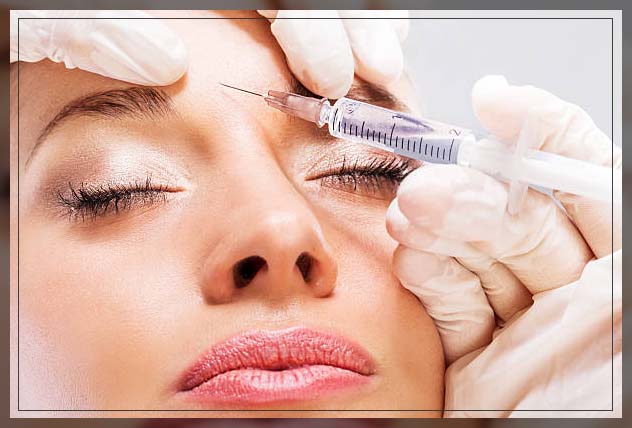
Crow’s feet appear around the outer corners of the eyes and are commonly associated with repeated contraction of the orbicularis oculi muscle.
This muscle is relatively superficial, making accurate injection placement particularly important. Treatment planning must account for the surrounding facial structures and the patient’s natural smiling pattern.
A personalised approach helps address visible expression lines without unnecessarily affecting neighbouring muscles.
What Happens When Botox Is Injected Too Superficially?
Superficial injections are not automatically incorrect because certain facial muscles are located close to the skin. However, injecting at an inappropriate depth for the intended target may influence treatment effectiveness.
When Botox is deposited too superficially relative to the target muscle, it may not adequately reach the intended muscular structures. This can result in less predictable muscle relaxation or a treatment outcome that does not fully address the patient’s concerns.
The appropriate depth depends on the anatomical location being treated. For instance, some areas require relatively shallow placement because the targeted muscle is close to the skin, whereas other areas require a different approach.
Practitioners must also consider the patient’s skin thickness, facial anatomy, and muscle activity when selecting an injection technique.
Rather than assuming that deeper injections always produce better results, treatment should focus on reaching the correct anatomical target.
Can Deeper Botox Injections Affect the Results?
Deeper injection placement may be appropriate for certain treatment areas where the targeted muscles are positioned further beneath the skin. However, unnecessary depth can influence the distribution of the product and its interaction with surrounding muscles.
Facial muscles rarely function independently. They work together to create expressions, maintain eyebrow positioning, and support different movements.
If Botox affects muscles beyond the intended treatment target, the resulting appearance may differ from what the patient originally expected.
This is particularly relevant in areas where several muscles are located close to one another. A detailed understanding of facial anatomy helps practitioners select injection locations that correspond with the intended cosmetic outcome.
The objective is to achieve controlled muscle relaxation rather than affecting a larger area than necessary.
How Does Skin Thickness Influence Injection Depth?
Skin thickness is another consideration during Botox treatment. Different facial regions naturally have different skin characteristics, while individual differences can also influence the overall anatomy of the treatment area.
Thicker skin does not necessarily mean that deeper Botox injections are required. This is because Botox is intended to act on specific muscular structures rather than directly changing the skin itself.
However, skin thickness and the amount of underlying tissue can influence how a practitioner approaches needle placement.
For example, the anatomical relationship between the skin and facial muscles may differ between the forehead, the area around the eyes, and the lower face.
A proper assessment helps determine how these differences should influence the injection technique.
What Role Does Facial Muscle Strength Play in Injection Depth?
Muscle strength is an important part of Botox treatment planning. Some individuals have stronger or more active facial muscles, while others have relatively mild muscle movement.
For example, a person with pronounced forehead muscle activity may require a different treatment strategy from someone with subtle expression lines.
However, stronger muscles do not automatically require deeper injections. The practitioner must identify the location of the targeted muscle and evaluate its movement before deciding on the appropriate placement and dosage.
Muscle strength, injection depth, product quantity, and injection points should be considered together.
This individualised approach helps avoid applying the same treatment technique to people with different facial characteristics.
How Can Injection Depth Help Maintain Natural Facial Expressions?
One of the main goals of modern Botox treatment is to soften unwanted lines while preserving the natural appearance of facial expressions.
Facial muscles play an essential role in communicating emotions. They contribute to smiling, raising the eyebrows, concentrating, and expressing surprise.
Over-relaxing these muscles can make facial movements appear less natural. For this reason, practitioners must understand how different muscles interact before selecting injection locations.
Appropriate injection depth can help target the intended muscle while reducing unnecessary effects on neighbouring structures.
A personalised treatment plan may also consider whether the patient prefers subtle wrinkle reduction or a more noticeable reduction in muscle movement.
The best approach is one that reflects the patient’s preferences while respecting individual facial anatomy.
Why Is a Personalised Assessment Important Before Botox?
A consultation is an important part of planning Botox treatment because facial anatomy and aesthetic expectations vary between individuals.
During an assessment, a qualified practitioner may consider:
- The location and depth of existing expression lines.
- Natural facial movements and muscle activity.
- Skin thickness and underlying tissue characteristics.
- Eyebrow position and facial proportions.
- Previous cosmetic treatments.
- The patient’s preferred appearance and treatment goals.
These considerations help determine the appropriate injection locations, depth, and dosage.
For patients exploring Botox in dubai, choosing a practitioner who understands facial anatomy and uses an individualised approach can make a meaningful difference to treatment planning.
Dr. Camellia Kamyab can assess the patient’s facial characteristics and discuss suitable options according to their aesthetic concerns.
What Should You Expect After Botox Treatment?
Botox treatment is generally performed as an outpatient procedure and does not usually require an extended recovery period.
The results do not appear immediately because the product needs time to influence communication between nerves and targeted muscles.
Some individuals begin noticing changes within a few days, while the full effect generally develops over approximately 10 to 14 days. The exact timeline can vary depending on the treatment area, dosage, and individual response.
Patients are usually advised to follow their practitioner’s aftercare instructions and attend any recommended follow-up appointment.
A review appointment can help assess how the targeted muscles have responded and whether the outcome matches the original treatment goals.
Choosing the Right Practitioner for Botox Injections in Dubai
Selecting an experienced practitioner is an important step when considering Botox. Although the procedure involves small injections, it requires a detailed understanding of facial anatomy, muscular function, and aesthetic proportions.
A suitable practitioner should be able to explain why particular injection points and depths are being considered and how the proposed approach relates to the patient’s facial characteristics.
Patients should also feel comfortable discussing their expectations and asking questions during the consultation.
When considering Botox Injections in Dubai, Dr. Camellia Kamyab provides an individualised approach to aesthetic treatment planning, with attention to facial movement, anatomical differences, and natural-looking results.
Understanding the treatment process before proceeding can help patients make informed decisions and develop realistic expectations.
Conclusion
Injection depth is an important technical consideration in Botox treatment because it influences how the product reaches the intended muscular target. However, there is no single injection depth that works for every facial region or individual.
Factors such as muscle position, facial movement, skin thickness, muscle strength, and treatment objectives all contribute to determining the appropriate injection technique.
A carefully planned approach focuses on accurate placement and balanced muscle relaxation rather than simply injecting deeper or more superficially. This helps support natural-looking outcomes while respecting the individual’s facial anatomy.
For those considering Botox in dubai, a professional consultation with Dr. Camellia Kamyab can help identify suitable treatment options based on individual facial characteristics and aesthetic goals.
Frequently Asked Questions About Botox Injection Depth
1. What is the ideal injection depth for Botox?
There is no universal ideal depth for Botox injections. The appropriate depth depends on the location of the targeted muscle, facial anatomy, skin thickness, and treatment objectives. Different facial areas may require different injection techniques.
2. Does injection depth affect Botox results?
Yes. Injection depth can influence whether Botox reaches the intended muscle and produces the desired level of muscle relaxation. Appropriate placement helps improve treatment precision and supports more predictable outcomes.
3. Are superficial Botox injections effective?
They can be effective when the targeted muscle is located close to the skin. Certain facial muscles are relatively superficial, so shallow injections may be appropriate. The correct technique depends on the anatomical treatment area.
4. Can Botox be injected too deeply?
Yes. An injection placed deeper than necessary may affect the distribution of Botox and potentially influence nearby muscles. Practitioners therefore select injection depth according to the location of the intended target.
5. Does thicker skin require deeper Botox injections?
Not necessarily. Botox targets specific muscles rather than the skin itself. Skin thickness is one consideration during treatment planning, but the position of the underlying muscle is more directly relevant when determining injection depth.
6. Does injection depth influence how long Botox lasts?
Injection depth is important for accurate placement, but it is not the only factor influencing treatment duration. Dosage, treatment area, muscle activity, individual metabolism, and personal response can also affect how long results remain visible.
7. Why do different facial areas require different Botox techniques?
Different facial areas contain muscles with varying thickness, positions, and functions. The forehead, frown lines, and crow’s feet therefore require different anatomical considerations when determining injection points and depth.
8. Can injection depth affect natural facial expressions?
Yes. Appropriate placement helps target the intended muscles while limiting unnecessary effects on neighbouring structures. This is important for maintaining balanced facial movement and achieving natural-looking results.
9. How long does it take to see Botox results?
Initial changes may become noticeable within three to five days, although individual responses vary. Most patients see the full effect within approximately 10 to 14 days after treatment.
10. How can I determine whether Botox is suitable for me?
A consultation with a qualified practitioner is the best way to determine suitability. The practitioner can assess facial anatomy, muscle activity, existing lines, and aesthetic expectations before recommending an appropriate treatment approach.